



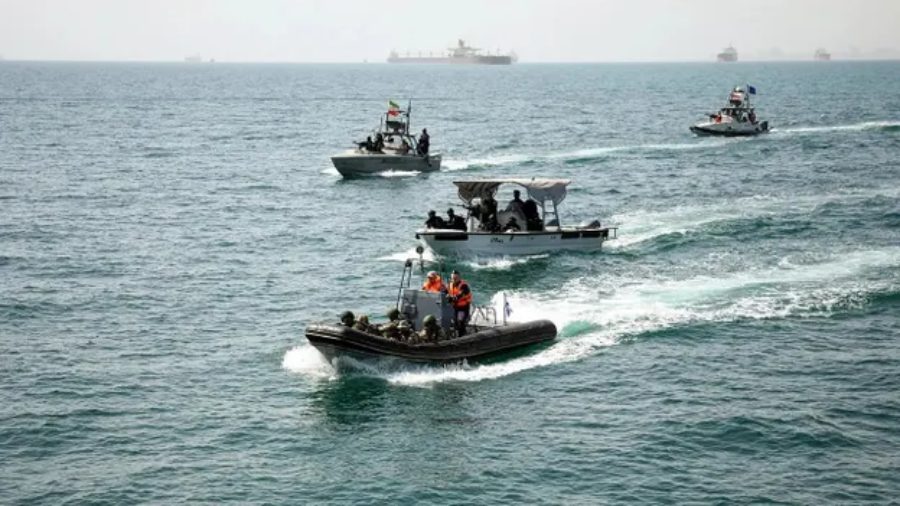
President Donald Trump is expressing doubt over a 14-point peace proposal offered by Iran, even as Pakistan continues helping facilitate talks between Tehran and Washington. The proposal comes during a volatile moment, with rising tensions around the Strait of Hormuz and a new U.S. operation aimed at moving stranded vessels through the key waterway.
The original report says Trump received the concept of a potential deal from Iran and expected to review its exact wording. But he suggested the proposal may not be acceptable, saying Iran had not yet paid a high enough price for its actions.
The full terms of Iran’s 14-point peace agreement were not included in the source article. That detail remains unclear and should not be assumed.
The most immediate flashpoint is the Strait of Hormuz, where Trump announced Project Freedom on Sunday. Under the plan, the U.S. military would begin guiding ships from other nations safely out of the strait starting Monday morning, Middle East time.
Trump described the move as a humanitarian step for countries, companies and crews caught in the crisis despite having no role in the wider Middle East conflict. He said many ships were running low on food and other essentials needed to keep large crews healthy and safe onboard.
The president said the ships would not return until the area became safe for navigation. He also warned that any interference with the operation would be handled forcefully.
Iran Warns Against U.S. Maritime Intervention
Iran responded with a warning. Ebrahim Azizi, head of Iran’s Parliament’s National Security and Foreign Policy Committee, said any American interference in Tehran’s new maritime rules in the Strait of Hormuz would be considered a breach of the ceasefire.
Azizi said the strait and the Persian Gulf were not places for rhetoric. He also rejected what he called “Blame Game scenarios” in comments shared in translated posts on X.
His remarks came after Trump announced the U.S. ship-guidance operation. That timing places the proposed peace plan and the maritime dispute on the same collision course.
U.S. Central Command said it would support Project Freedom beginning May 4. CENTCOM described the mission as an effort to restore freedom of navigation for commercial shipping through an essential international trade route.
The command said the mission would support merchant vessels seeking to transit freely through the strait. It also said the waterway carries a quarter of the world’s oil trade at sea, along with significant fuel and fertilizer shipments.
CENTCOM said U.S. support would include guided-missile destroyers, more than 100 land and sea-based aircraft, multi-domain unmanned platforms and 15,000 service members.
Adm. Brad Cooper, the CENTCOM commander, said the support was essential for regional security and the global economy while the U.S. maintained its naval blockade.
Shipping Attacks Add Urgency to the Crisis
The crisis intensified as maritime warnings emerged near the United Arab Emirates and inside the Strait of Hormuz. The United Kingdom Maritime Trade Operations said it received a report of a tanker being hit by unknown projectiles 78 nautical miles north of Fujairah.
All crew members were reported safe, and no environmental impact was reported. Authorities were investigating the incident.
Earlier, a large cargo ship reported being attacked by multiple small craft while moving through the Strait of Hormuz about 11 miles from the Iranian coast. The UK Maritime Trade Operations Center reported no injuries in that incident.
These incidents matter because they increase pressure on the U.S., Iran and regional actors at the same time diplomatic talks are still unfolding.
U.S. Officials Defend Freedom of Navigation
Michael Waltz, the U.S. ambassador to the United Nations, said the U.S. and Gulf partners would continue defending freedom of navigation. He criticized Iran’s alleged sea mines and attempts to “toll” civilian commercial shipping, calling those actions illegal and unacceptable.
Waltz said the world could not allow one side in a conflict to punish global economies as leverage against another side. He also warned that the precedent could matter beyond Hormuz, naming the Straits of Malacca and Gibraltar as examples of other vital waterways.
Sen. Lindsey Graham also backed Trump’s Project Freedom, saying the Strait of Hormuz is a vital route for the world economy. He accused Iran of playing games through negotiations and called its latest offer to end the conflict “absurd.”
The shutdown and disruption in the strait have affected oil shipments from Gulf producers, removing millions of barrels per day from the global market, according to the source article.
Seven members of OPEC+ confirmed they would increase production as part of a commitment to market stability. Saudi Arabia, Russia, Algeria, Iraq, Kazakhstan, Kuwait and Oman said they would raise production by 188,000 barrels per day starting in June.
They also confirmed monthly meetings to review market conditions, conformity and compensation. The article also notes that the United Arab Emirates has left the OPEC oil group.
Germany Pushes for Negotiated Solution
European officials also entered the debate. German Foreign Minister Johann Wadephul said he spoke with Iranian Foreign Minister Abbas Araghchi and emphasized Germany’s support for a negotiated solution.
Wadephul said Germany, as a close U.S. ally, shares the goal that Iran must completely and verifiably renounce nuclear weapons and immediately release the Strait of Hormuz.
German Chancellor Friedrich Merz also reaffirmed Germany’s support for the United States over Iran’s nuclear ambitions. He said the United States remains Germany’s most important partner in the North Atlantic Alliance.
Merz added that he was not giving up on working with Trump, despite tensions between the two leaders and the Pentagon’s order to withdraw 5,000 U.S. troops from Germany.
Trump told reporters that he had discussed the concept of a potential deal with Iran and expected to receive the exact wording.
He said Iran wanted to make a deal and described the country as “decimated.” Trump also said he could not imagine the proposal would be acceptable because, in his view, Iran had not paid a large enough price.
He warned there was still a possibility the U.S. could restart military strikes on targets.
In separate remarks, Trump defended the war with Iran as necessary to prevent the country from obtaining a nuclear weapon. He said the United States could not allow “lunatics” to have nuclear weapons.
Why the Iran Peace Proposal Matters
The Iran peace proposal matters because it appears at a moment when diplomacy, military pressure and maritime security are all moving at once. Trump says talks could lead to something positive, but he is also backing a military-supported operation to move ships through the Strait of Hormuz.
For neutral countries and companies, the immediate concern is the ships and crews trapped in the strait. For the U.S. and Gulf partners, the issue is freedom of navigation. For Iran, U.S. involvement in the maritime zone is being framed as a potential ceasefire breach.
The situation also affects global markets because the Strait of Hormuz is a major route for oil and fuel shipments. Any prolonged disruption can create wider economic consequences beyond the region.
The dispute over Iran’s 14-point peace proposal is unfolding alongside an increasingly tense maritime standoff. Trump says Iran wants a deal, but he remains skeptical of the offer and has warned that the U.S. could respond forcefully if Project Freedom is obstructed.
With Pakistan facilitating talks, CENTCOM preparing support, Iran warning against U.S. interference and shipping incidents adding urgency, the next phase will test whether diplomacy can advance while military pressure continues in the Strait of Hormuz.