



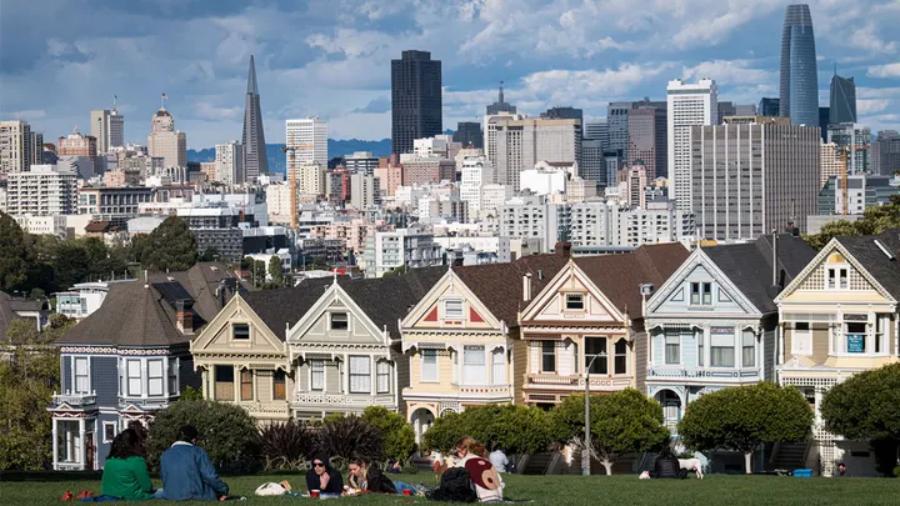
The metro area — which encompasses not only the city itself but also the East Bay, Peninsula, and Marin County — recorded a population that was 2.6% lower in July 2025 than it was in April 2020, according to the most recent metro-level census data.
To put that in context: among all U.S. metro areas with populations exceeding 1.5 million people, only Los Angeles recorded a steeper decline over the same period — and Los Angeles was down just marginally more, at 2.7%.
The San Francisco metro area’s failure to grow stands out even more sharply given the economic environment. While almost every other major metropolitan area in the country saw population increases during the same window, San Francisco — home to or neighboring some of the world’s most valuable technology companies — could not translate that economic activity into population recovery.
The Chronicle noted, however, that the trajectory is not entirely bleak. After reaching its lowest point in 2022, population decline in both the San Francisco and San Jose metro areas has generally leveled off, with numbers creeping slightly upward. Los Angeles, similarly, has stabilized near its lowest recorded point.
“It’s not as though the Bay Area’s population has been in free fall since the pandemic,” the Chronicle reported.
But stabilizing near the bottom is not the same as recovering. And for a city that once seemed synonymous with the promise of American innovation and prosperity, the gap between narrative and reality remains significant.
What Drove People Out
The exodus from San Francisco did not happen in a vacuum. Former residents who have spoken publicly about their departures have consistently pointed to a cluster of interconnected quality-of-life concerns that accumulated over years.
Homelessness became a defining and visible feature of city life in ways that alienated longtime residents and deterred newcomers. Crime — particularly brazen retail theft and street-level drug activity — created a sense of disorder that the city struggled to credibly address. And housing costs continued their decades-long climb to levels that made the Bay Area functionally inaccessible to many of the working- and middle-class residents who might otherwise have stayed or relocated there.
For many, the calculus became simple: a comparable quality of life — or a better one — was available elsewhere for considerably less money.
A Political Shift With National Attention
The crisis eventually produced a political response. In 2024, San Francisco voters chose Daniel Lurie as their new mayor, defeating incumbent Democrat London Breed in a race that reflected a broader shift away from the lenient policies on crime, drug enforcement, and homelessness that critics had blamed for the city’s decline.
The election of Lurie — a moderate Democrat — was part of a wider realignment in which centrist voices within the local Democratic Party pushed back against progressive leadership that had dominated San Francisco politics for years.
The shift caught the attention of President Donald Trump, who offered unusually warm words for a Democratic-led city during a recent Cabinet meeting.
“San Francisco is a great city,” Trump said, praising Lurie for “really trying” to improve conditions on the ground.
The praise from a Republican president for a Democratic mayor in one of the country’s most historically progressive cities underscored how significantly the political terrain in San Francisco has shifted — and how much both sides of the national political divide have been watching the city’s attempted transformation.
Money Behind the Moderate Movement
The shift toward moderation in San Francisco has not been purely organic. It has been deliberately organized and substantially funded.
Neighbors for a Better San Francisco, a local advocacy group, raised $10 million to pour into local elections — with the explicit goal of preventing progressive candidates from being re-elected and, as a Politico report described it, knocking the city “off its more centrist course.”
The investment reflects a recognition among moderate Democrats and business-aligned interests that the policy changes made over the past several years remain fragile — and that a reversal toward progressive governance could undo the early steps toward stabilization that Lurie’s administration has begun to take.
San Francisco remains one of the most economically dynamic regions in the world. The AI industry alone has generated staggering amounts of wealth within its orbit. And yet the people — the permanent, full-time residents who make a city a community rather than a workspace — have not returned in sufficient numbers to restore what was lost between 2020 and 2022. The political shift toward moderation offers a framework for recovery. The $10 million pouring into local elections signals that the effort to hold that ground is serious. But population numbers do not respond to political promises. They respond to quality of life. Whether San Francisco can deliver that — in a city where housing, homelessness, and the cost of simply existing have long outrun what most residents can sustain — remains the central unanswered question of its recovery.