



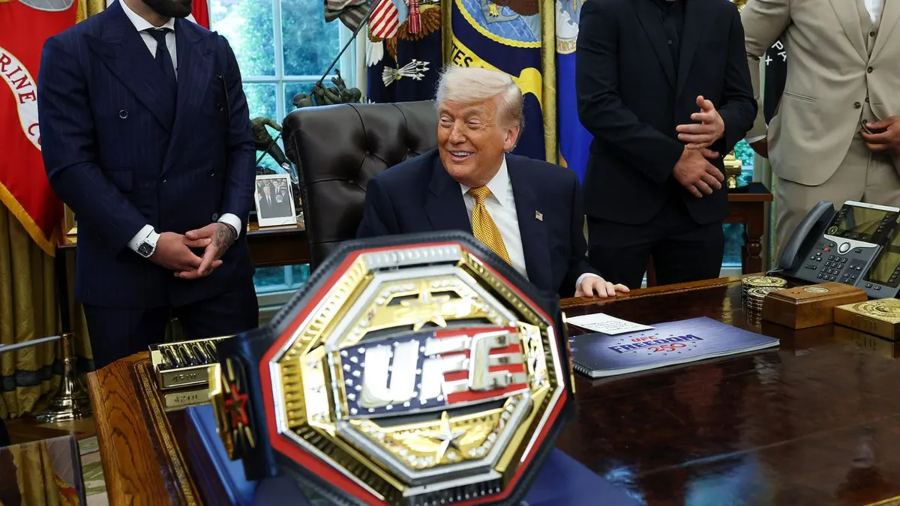
A plan to stage UFC Freedom 250 on the White House South Lawn has become the subject of a federal lawsuit, as two Virginia residents seek an emergency injunction to stop the event before fight night.
The lawsuit, filed against the National Park Service and the Department of the Interior, argues that organizers bypassed federal rules, skipped environmental review and raised conflict-of-interest concerns by allowing a major combat sports event to take place on one of the country’s most symbolic public spaces.
The event is scheduled for June 14 and has been promoted as part of America’s 250th anniversary celebration. But the plaintiffs say the UFC card is less a patriotic commemoration than a private commercial spectacle tied to President Donald Trump, UFC leadership and corporate interests.
The Lawsuit
The legal challenge asks a federal court to halt the event through an emergency injunction.
According to the complaint, the South Lawn and nearby federal property are subject to restrictions that generally limit commercial structures and private sporting events. The lawsuit claims organizers did not complete the required environmental reviews and did not receive proper congressional approval for event construction.
The Associated Press reported that the lawsuit was filed by the Public Integrity Project on behalf of two Virginia residents. The complaint argues that federal parkland rules bar sporting events of this kind and that the event should not move forward without the required legal process.
The plaintiffs also challenge construction tied to the event, including a large venue structure being prepared for the UFC card.
UFC Freedom 250 is being positioned as part of the federal government’s broader celebration of the nation’s semiquincentennial.
The plan is to stage a UFC event on the White House South Lawn, with a temporary arena built near the executive mansion. AP reported that construction is underway for a 5,000-seat octagon-shaped arena, with large screens and free ticket distribution planned for attendees on the South Lawn and nearby Ellipse.
The event has drawn attention not only because of its location, but because of the unusual pairing: mixed martial arts, the White House and a national anniversary celebration.
Supporters have framed it as a historic public event. Critics see it as a misuse of federal property for a brand-driven spectacle.
The Conflict-of-Interest Allegations
The lawsuit also raises financial and ethical concerns.
The complaint alleges the event could benefit Trump and several associates, including UFC CEO Dana White and Paramount-Skydance CEO David Ellison. It also points to Trump’s reported purchase of up to $50,000 in stock in TKO Group Holdings, the publicly traded parent company of the UFC.
The plaintiffs argue that those ties make the event more troubling than a routine public celebration. Their position is that the White House grounds are being used in a way that may elevate private commercial interests under the banner of national commemoration.
MMA Fighting reported that the complaint characterizes the event as a “corrupt scheme” and seeks a temporary restraining order while the court reviews the case.
The Environmental Review Question
Environmental review is a central part of the lawsuit.
The plaintiffs argue that federal officials failed to conduct the required review before allowing construction and event preparation to proceed on sensitive federal property. They also claim the project may create costs or damage tied to use of the lawn and surrounding grounds.
The lawsuit says the South Lawn and related federal spaces are not ordinary event venues. They carry historic, civic and environmental significance, which is why the plaintiffs argue that federal approval rules should have been followed before the event was permitted.
The White House, however, has rejected that argument and described the lawsuit as an obstructionist effort to stop a properly permitted celebration.
The UFC has previously said the event is not designed to generate profit.
Public reporting cited in the available source material says the event could cost tens of millions of dollars, with estimates reaching $60 million. TKO president Mark Shapiro has said the event is not expected to turn a profit, with the goal being to recoup part of the cost through sponsors and partnerships.
That claim directly conflicts with the plaintiffs’ framing. UFC and its defenders present the event as a major national celebration with private backing. The lawsuit portrays it as a commercial entertainment venture using public space and presidential proximity to enhance brand value.
That dispute — celebration or private spectacle — sits at the heart of the case.
The White House Response
The White House has pushed back against the lawsuit.
According to AP, officials dismissed the legal challenge as an attempt to derail a properly permitted celebration and compared the UFC event to other public events held on federal grounds.
That response suggests the administration views the lawsuit as political and procedural obstruction rather than a serious legal barrier.
Still, the timing makes the case urgent. With the event scheduled for June 14, the court would have to move quickly if it intends to stop the UFC card before construction and logistics are complete.
Why the Case Matters
The lawsuit matters because it tests how far a presidential administration can go in using the White House grounds for high-profile entertainment events tied to national celebrations.
The South Lawn has hosted public ceremonies, official gatherings and cultural events before. But a UFC fight card creates a different kind of legal and symbolic question.
For the plaintiffs, the issue is not simply whether mixed martial arts belongs at the White House. It is whether federal land-use rules, environmental review laws and ethics safeguards can be bypassed when an event has presidential support.
For the White House, the event is part of a broader effort to stage a memorable celebration of America’s 250th birthday. For critics, it risks turning public land and historic symbols into a private promotional platform.
The federal lawsuit against UFC Freedom 250 has turned a planned White House fight night into a legal and political battle over public land, private profit and presidential power.
The plaintiffs argue the event skipped required review and could financially benefit Trump-connected interests. The White House says the celebration is properly permitted and should proceed.
Now the court must decide whether the UFC’s South Lawn spectacle can move forward — or whether the fight over the event will end before anyone steps into the octagon.