



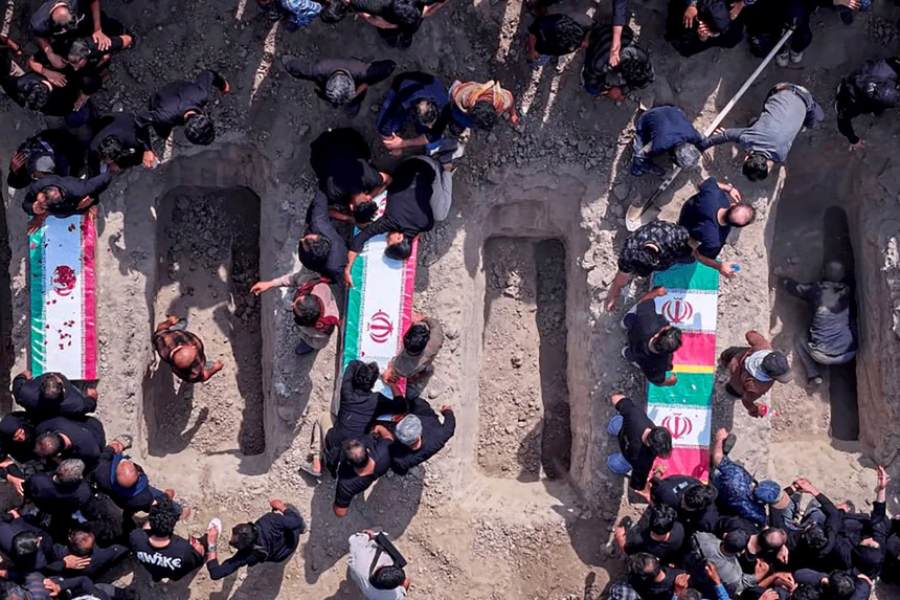
A missile tore through a girls’ elementary school in southern Iran on the morning of February 28, killing more than 170 people — most of them young students. Weeks later, a US military investigation is pointing toward a devastating explanation: the strike was likely guided by intelligence that was over a decade out of date.
Four sources with knowledge of the probe’s preliminary findings told that the munition almost certainly did not malfunction or veer off course. It hit exactly where it was aimed. The problem, investigators now believe, was that the target itself was wrong. The Shajareh Tayyebeh elementary school in Minab occupies a compound that, approximately 15 years ago, functioned as a base for Iran’s Islamic Revolutionary Guard Corps. Witnesses and an official from Iran’s Education Ministry have both confirmed this historical use — but also confirmed the site had long since been converted into a functioning school.
Despite that, the target apparently remained flagged in US military databases as a legitimate military objective.
“The munition did not go off target,” said one source familiar with the investigation’s direction. It hit the school because old intelligence showed it to be a military target — not because of a navigation error or weapons malfunction. According to two sources, the Defense Intelligence Agency (DIA) was among the agencies that supplied the targeting data connected to the strike. A US official noted that the DIA assessed the targets as valid at the time the intelligence was gathered — though the agency was not necessarily the sole source. Intelligence from US allies was also likely used to help verify the target, the sources said.
The US military typically requires sign-off from multiple intelligence organizations before a strike is authorized. Yet officials have so far been unable to pinpoint exactly where in that verification chain the process broke down — and how a school full of children came to be designated as a valid military objective.
Israel’s Involvement in Target Selection
The same US official confirmed that Israel played a role in the target selection process that led to the likely American strike on the school. The attack on Minab occurred on the opening day of coordinated US and Israeli strikes against Iran — a broader military campaign that also resulted in the death of Supreme Leader Ayatollah Ali Khamenei. The Israeli embassy in Washington for comment. No response was received. Physical evidence recovered from the scene has added significant weight to the investigation’s early conclusions. Fragments of the missile — circulated by Iranian state media — display markings that weapons experts, reviewing imagery obtained by NBC News and other outlets, identified as consistent with an American Tomahawk cruise missile.
Critically, the US is the only nation currently engaged in the conflict known to deploy Tomahawk missiles. President Donald Trump has repeatedly pushed back against the suggestion that the United States was behind the strike. Speaking to reporters aboard Air Force One, he pointed the finger elsewhere.
“In my opinion, based on what I’ve seen, that was done by Iran,” Trump said, offering no supporting evidence for the claim.
However, when pressed again the following day, the president appeared to leave room for the investigation’s conclusions to stand. “Whatever the report shows, I’m willing to live with that report,” he said.
The military has not yet formally concluded that the United States is responsible, though preliminary findings strongly suggest American involvement. The human toll has drawn urgent condemnation from the international community. A panel of United Nations experts issued a stark warning last week, stating that an attack on a functioning school during class hours raises what they called “the most serious concerns under international law.”
The experts noted that deliberate strikes on educational facilities are classified as war crimes under international humanitarian law — a designation that will likely intensify scrutiny of the target validation process as the investigation continues. The military investigation remains ongoing, and officials have not yet formally assigned responsibility. But the preliminary direction is clear: a breakdown somewhere in the intelligence and target verification process sent a missile into a school that had not been a military installation for a generation.
With physical evidence, source accounts, and weapons expert analysis all converging on US involvement, the coming weeks are likely to bring formal conclusions — and with them, serious questions about accountability, intelligence reform, and the human cost of acting on outdated information.