



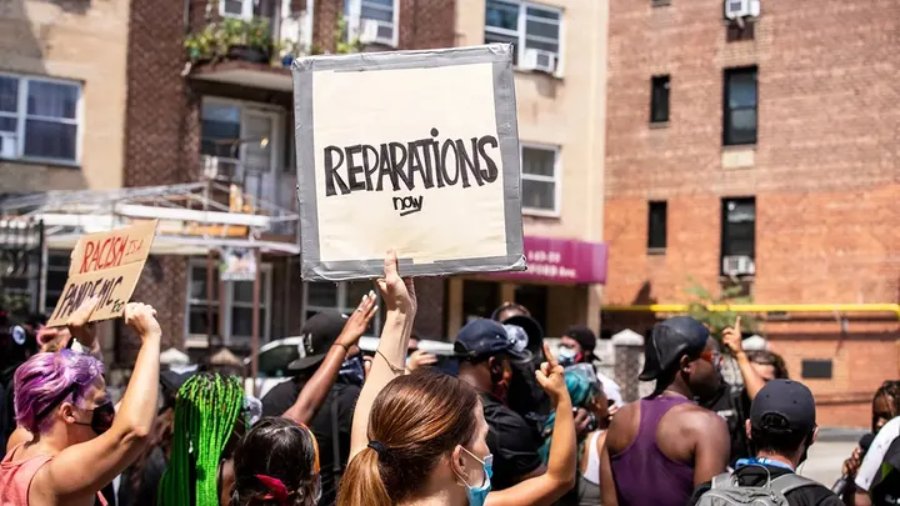
The nation’s first municipal reparations program is heading to court — and a federal judge has decided the case is worth hearing.
On Friday, U.S. District Judge John F. Kness rejected the City of Evanston, Illinois’ attempt to have a constitutional lawsuit against its reparations initiative thrown out, allowing the case brought by conservative watchdog group Judicial Watch to move forward.
The ruling represents a significant legal moment for a program that has been celebrated by reparations advocates and condemned by its critics in equal measure since it became the first of its kind in the United States.
Evanston made history when it became the first American city to pass a formal reparations plan, committing $10 million over a decade to Black residents as a form of redress for historical housing discrimination.
At the center of the legal dispute is the program’s core mechanism: $25,000 direct cash payments made exclusively to Black residents of Evanston, or to documented descendants of Black residents who lived in the city between 1919 and 1969.
To date, the program has reached 137 recipients, distributing a combined $3.47 million in payments. The city’s Reparations Committee announced in February that an additional cohort is expected to bring the total to 171 recipients by year’s end, with approximately $4 million allocated to direct descendants.
The Legal Challenge
Judicial Watch filed a class action civil rights lawsuit against the city, arguing that restricting program eligibility based on race places the initiative in direct conflict with the Equal Protection Clause of the Fourteenth Amendment — the constitutional provision guaranteeing equal treatment under the law regardless of race.
The organization represents five plaintiffs who contend the program’s racial eligibility requirement renders it unconstitutional on its face.
Evanston pushed back with a procedural argument: that none of the plaintiffs had actually applied to the program, and that the application window had closed in 2021. The city further argued that some applicants could have been deemed ineligible for reasons entirely unrelated to race — such as the absence of qualifying property ties.
Judge Kness was not persuaded that these arguments warranted dismissal, allowing the lawsuit to proceed on its merits.
Judicial Watch President Tom Fitton welcomed the ruling with pointed language.
“Evanston’s reparations program provides $25,000 cash payments to Blacks only,” Fitton said. “The Constitution forbids race-based government programs like this. We welcome the court’s decision to allow this historic lawsuit to move forward against this woke, racist program.”
The organization has positioned the case as a broader test of whether municipalities can legally design race-exclusive benefit programs — a question with implications that could extend well beyond Evanston if the case ultimately produces a significant ruling.
Evanston Stands Firm
The city made clear it has no intention of backing down.
“The city is aware of the court’s recent ruling. The city will continue to vehemently defend this case,” a spokesperson told Fox News Digital.
The response signals that Evanston intends to contest the lawsuit at every stage — setting the stage for what could become a protracted and nationally watched legal battle over the constitutional boundaries of local reparations initiatives.
The Evanston case does not exist in isolation. Across Illinois, similar conversations — and similar tensions — are playing out.
Chicago Mayor Brandon Johnson is moving forward with a public engagement initiative called “Repair Chicago,” designed to collect firsthand accounts of harm experienced by Black Chicagoans as part of a broader effort to develop a reparations framework for the city. This comes as Chicago simultaneously grapples with a reported $150 million budget deficit — a fiscal backdrop that critics argue makes large-scale direct payments financially untenable.
Evanston’s legal battle, meanwhile, is being watched closely by advocates and opponents of reparations alike. If Judicial Watch ultimately prevails, the ruling could cast serious doubt on the legal viability of similar programs being developed in cities across the country. If Evanston successfully defends its program, it could accelerate the movement’s momentum.
Friday’s ruling does not decide whether Evanston’s reparations program is constitutional. What it does decide is that the question deserves a full legal examination — and that the case will not be quietly dismissed. With $4 million in payments already distributed or committed, and a city government pledging a vigorous defense, the lawsuit now enters a phase that could ultimately shape how American courts view the intersection of race, government benefits, and constitutional equality. The outcome will matter far beyond the borders of one Illinois suburb.