



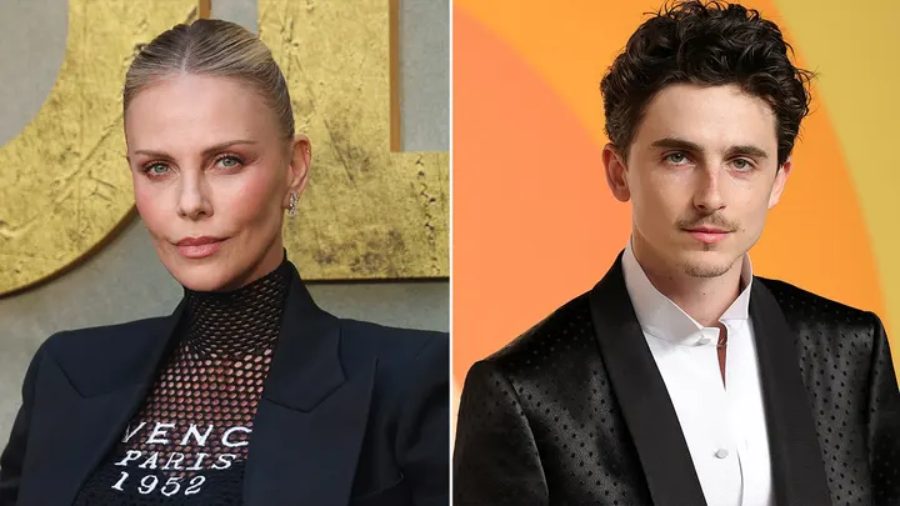
When Timothée Chalamet made an offhand remark about ballet and opera back in February, the blowback from arts institutions was swift. Two months later, the controversy has found a new and considerably more personal voice.
Charlize Theron — Academy Award-winning actress, former dancer, and someone who has bled through her shoes in the name of her craft — has had enough.
“Oh, boy, I hope I run into him one day,” Theron said during a New York Times interview. “That was a very reckless comment on an art form, two art forms, that we need to lift up constantly because, yes, they do have a hard time.”
The remarks that ignited the controversy came during Chalamet’s appearance at a CNN and Variety town hall in February. Asked about the kinds of creative work he gravitates toward, the actor drew a distinction between projects that feel vital and those that feel like cultural preservation exercises.
“I don’t want to be working in ballet, or opera, or things where it’s like, ‘Hey, keep this thing alive, even though like no one cares about this anymore,'” Chalamet said. He added a brief qualifier — “All respect to all the ballet and opera people out there” — accompanied by a laugh.
The qualifier did not do the work he may have hoped it would.
The Institutions Fired Back First
Before Theron entered the conversation, some of the world’s most prestigious performing arts organizations had already pushed back — and they went directly at Chalamet by name.
The Metropolitan Opera posted a video response that opened with Chalamet’s own words, then spotlighted the vast scale of effort that goes into every production. The caption tagged the actor directly.
“This one’s for you, @tchalamet…” the Met wrote, appending the full quote back to him: “All respect to the opera (and ballet) people out there.”
The Royal Ballet and Opera posted a montage of performances and backstage footage, overlaid with audio of Chalamet’s remarks, before cutting to packed houses and a two-word message on screen: “We care.”
“Every night at the Royal Opera House, thousands of people gather for ballet and opera,” the organization wrote. “For the music. For the storytelling. For the sheer magic of live performance. If you’d like to reconsider, @tchalamet, our doors are open.”
Theron’s Defense — Personal and Pointed
What made Theron’s response distinct from the institutional pushback was its deeply personal grounding. She is not defending ballet and opera from the outside. She lived inside the discipline they demand.
Theron trained as a dancer before injuries redirected her path toward acting — a background she drew on explicitly to describe what Chalamet’s comment had dismissed so casually.
“Dance taught me discipline. It taught structure. It taught hard work. It taught me to be tough. It’s borderline abusive. There were several times that I had blood infections from blisters that just never healed. And you don’t get a day off. I’m literally talking about bleeding through your shoes.”
She did not soften the description or offer it as nostalgia. It was a direct rebuttal — a reminder that the art forms Chalamet had waved away as culturally irrelevant are sustained by a level of physical sacrifice and mental fortitude that most professions never demand.
“And that’s something that you have to practice every single day, the mind-set of just, you don’t give up, there’s no other option, you keep going,” she said.
The AI Argument
Theron also introduced a forward-looking dimension to her defense — one that reframed Chalamet’s dismissal of performing arts through the lens of the technology that is already beginning to reshape the entertainment industry he works in.
“In 10 years, AI is going to be able to do Timothée’s job, but it will not be able to replace a person on a stage dancing live. And we shouldn’t expletive on other art forms.”
The argument cuts in multiple directions simultaneously: it challenges the assumption that film acting is more culturally durable than ballet or opera, it raises a genuine concern about AI’s encroachment on creative professions, and it suggests that the very irreplaceability of live performance — its human, physical, present-tense nature — is what makes it worth defending rather than dismissing.
Timothée Chalamet made a comment he likely intended as an expression of creative ambition — a desire to work on things that feel alive and culturally urgent rather than things that feel like institutional maintenance. Charlize Theron heard it as something else: a dismissal of disciplines that demand more of the human body and spirit than most people will ever be asked to give. She is not the first to push back, and she probably will not be the last. But “I hope I run into him one day” — delivered by a woman who has danced until her feet bled — lands with a particular kind of weight. Fox News Digital reached out to both Theron and Chalamet for comment; neither had responded at time of publication.