



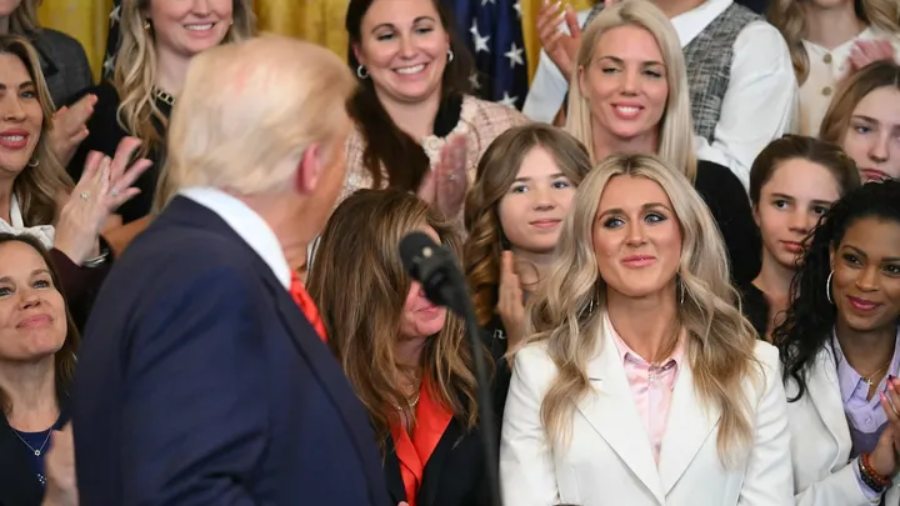
Gaines said she had received “so much pushback” from Trump’s online supporters after objecting to the image, which depicted Trump in robes while appearing to heal a sick man. She argued that several things could be true at once: that Trump could benefit from more humility, that God should not be mocked, and that she still stands by her vote.
That was the heart of her message. Gaines did not frame her criticism as a break with Trump. Instead, she presented it as a line she believed should not be crossed, especially when religious imagery is involved. [Suggested Link: Riley Gaines Show]
The controversy centered on an AI-generated image of Trump in robes, surrounded by followers and patriotic visuals, as he appeared to heal an ill man. Gaines was among the conservative voices who said the post crossed a line. According to the article, criticism came from both sides of the aisle, including from some of Trump’s own supporters, many of whom viewed the image as inappropriate or blasphemous.
That response matters because it showed the backlash did not come only from Trump’s political opponents. It also exposed a divide inside his broader support base, where some supporters defended him reflexively while others said the post went too far. [Suggested Link: Donald Trump Truth Social controversy]
Trump rejects religious reading of the post
When reporters asked Trump about the image on Monday, he dismissed the criticism and said he believed it showed him as a doctor. He said he thought it related to the Red Cross and insisted the image was meant to portray him making people better. The image was later deleted.
Later, when a reporter asked whether he took the image down because of criticism from Gaines and others, Trump said he did not act because of her and added that he was “not a big fan” of Gaines. That remark turned an already heated online debate into a more personal political spat.
On her show, Gaines described a digital environment where disagreement with Trump is often treated as betrayal. She said the tone of the online response made it seem as though raising concerns about the post was somehow irrational.
That frustration was echoed in a conversation with guest Nick Freitas, a Green Beret veteran, who said he was glad the image had been taken down. Freitas said the reaction to the controversy seemed to break into three camps: habitual Trump critics, loyalists who opposed any criticism that might overlap with liberal attacks, and people like himself and Gaines who believed the image should never have been posted but still backed Trump’s presidency.
Religious line, political loyalty
Freitas argued that anyone portraying himself in a way that suggests a comparison with Christ is making a serious mistake. He said Christ is someone to be venerated, not used as part of self-presentation. Gaines’ own remarks pointed in the same direction: her objection was moral and religious, not political.
That distinction is central to the story. Gaines did not walk away from Trump. Instead, she tried to separate her support for his presidency from her belief that the post was wrong. [Suggested Link: America First agenda]
Gaines reaffirms support despite Trump’s jab
Even after Trump publicly distanced himself from her, Gaines said she still supports him and remains grateful that he is in the White House. In a social media post, she wrote that she would continue backing the president and the America First agenda, while also saying her purpose is to glorify God in all she does.
That final point underlined the balance Gaines appeared determined to strike: loyalty to Trump’s broader agenda, paired with an insistence that faith and reverence should not be treated casually.
The dispute over the AI Trump image did more than trigger a brief social-media argument. It highlighted a fault line within Trump’s own coalition, especially among supporters who see religious boundaries as non-negotiable. Gaines’ response showed that even committed allies may challenge the president when they believe those boundaries have been crossed.
For now, Gaines is standing firm on both points: she believes the post was inappropriate, and she still supports Trump. In that sense, her message was not one of political defection, but of warning — and of a call for humility.