



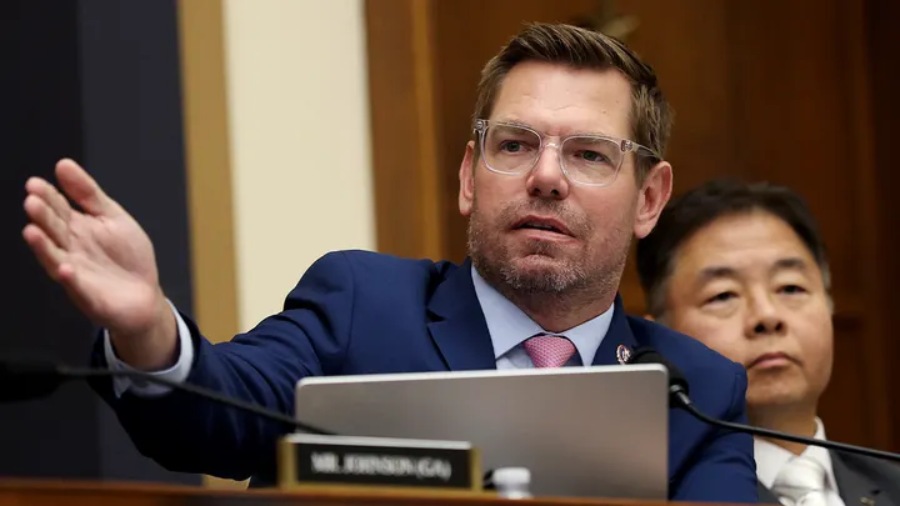
California gubernatorial candidate Rep. Eric Swalwell (D-Calif.) is facing allegations of sexual misconduct, which his campaign has firmly denied, calling them baseless and politically motivated. The claims surfaced just weeks before voting begins in the state’s primary election.
A spokesperson for Swalwell, Micah Beasley, dismissed the accusations as false and described them as an attempt by political rivals to damage the congressman’s standing ahead of the election. According to Beasley, opponents are spreading misinformation because Swalwell is currently leading the race.
The allegations were raised by Cheyenne Hunt, a former Capitol Hill staffer and political media figure. Hunt has publicly accused Swalwell of inappropriate conduct involving women who worked with him.
In a social media post, Hunt alleged that the candidate has a history of making unwanted advances toward female staffers. She also shared a message she says was sent to her privately, claiming that Swalwell had relationships with interns and required them to sign non-disclosure agreements.
Hunt further stated that she personally experienced an incident when she was 19, alleging that Swalwell attempted to contact her through direct messages.
Additional Women Allegedly Coming Forward
Since making her initial claims public, Hunt said multiple women have reached out to her with similar accounts.
- She stated she is currently working with a group of women willing to share their experiences
- She also referenced a larger group of individuals who are in the process of coming forward
- However, no names or specific details about these individuals have been disclosed
Hunt emphasized that efforts are underway to present these accounts through proper legal and investigative channels.
Campaign Counters With Record of No Complaints
Swalwell’s campaign has strongly rejected the allegations, pointing to what it describes as a clean record over more than a decade in office.
Beasley highlighted two key points:
- No staff members have ever been asked to sign non-disclosure agreements during Swalwell’s 13 years in Congress
- No ethics complaints have been filed by current or former staff
The campaign argues that the absence of documented complaints undermines the credibility of the accusations.
The controversy has sparked discussion among Democratic strategists and activists. Some within the party have urged caution while emphasizing the need to examine the claims carefully.
Bhavik Lathia, a Democratic strategist, publicly urged fellow Democrats to take the allegations seriously, suggesting that more information could emerge in the coming days.
At the same time, Hunt criticized the campaign’s response, particularly suggestions that the accusations are politically motivated.
She argued that dismissing the claims as partisan attacks risks discrediting individuals who may be attempting to share their experiences.
Timing Raises Stakes Ahead of Election
The allegations come at a critical moment in the California gubernatorial race. Mail-in voting is scheduled to begin on May 4, with the primary election set for June 2, according to the state’s Secretary of State.
With the timeline tightening, the controversy could influence voter perception as candidates make their final push before ballots are cast.
The situation remains unresolved, with no formal complaints or verified evidence publicly presented at this stage. However, the claims and the campaign’s response have already introduced a new dimension to the race.
As more information potentially emerges, both the political and public response will likely shape how the issue impacts the election.
The dispute between Eric Swalwell’s campaign and Cheyenne Hunt highlights a high-stakes clash of claims and denials just weeks before a major election. While the campaign insists there is no factual basis for the allegations, Hunt maintains that more voices may soon come forward.
The coming weeks will be crucial in determining whether the controversy escalates or fades — and how it ultimately affects the California gubernatorial race