



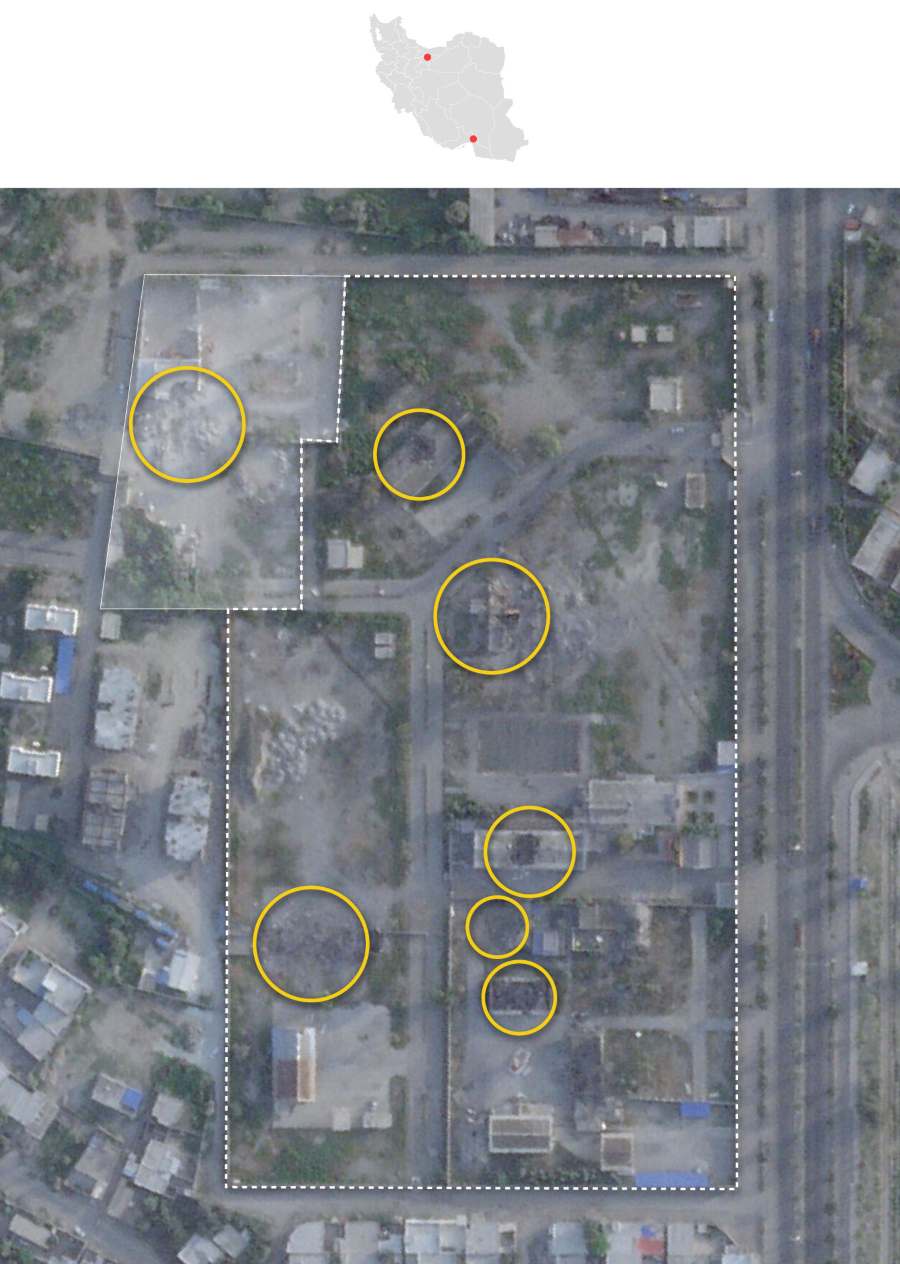
Nearly a week has passed since airstrikes reduced an elementary school in Minab, a town in southern Iran, to smoldering rubble — and still no government has claimed responsibility for a attack that claimed more than 170 lives, most of them children.
Witnesses describe stumbling through wreckage looking for survivors. What they found instead were severed limbs, crushed classrooms, and bodies buried beneath collapsed walls. The victims included boys and girls who had been sitting in class at Shajareh Tayyebeh school on a Saturday morning.
Now, the question consuming Washington, Tehran, and international human rights bodies is the same: who gave the order — and why?
Behind closed doors, the Trump administration has offered its most telling answer yet.
In a confidential congressional briefing this week, administration officials told lawmakers that U.S. forces were actively targeting the area where the school stood when the strikes hit. They also stated that military partner Israel bore no responsibility for the school’s destruction, according to two U.S. officials familiar with the meeting.
No public claim of responsibility has followed. But the administration’s own preliminary review is now pointing unmistakably toward American ordnance. A U.S. official and a separate source with knowledge of the ongoing investigation told NBC News that it is increasingly likely a U.S. munition was used in the strike. Investigators are still working to determine whether the cause was flawed intelligence, a targeting error, or some combination of both.
[Suggested Link: U.S. military investigation process for civilian casualty incidents]
The administration offered Congress no competing theory about who may otherwise be responsible.
“We Never Target Civilians” — But Questions Persist
Senior U.S. officials have been careful in their public statements — but careful in a way that has done little to quiet the growing outcry.
Defense Secretary Pete Hegseth confirmed Wednesday that the U.S. is “investigating” the incident, stating: “We, of course, never target civilian targets, but we’re taking a look and investigating that.”
Secretary of State Marco Rubio told reporters earlier in the week that American forces “would not deliberately target a school.”
And Gen. Dan Caine, Chairman of the Joint Chiefs of Staff, confirmed at a Wednesday press conference that U.S. forces had been conducting strikes throughout southern Iran — sharing a map that appeared to place the Minab area within the targeted zone. He noted that Israeli operations had been concentrated further north.
Iran’s Foreign Minister Abbas Araghchi, in an exclusive interview with NBC News’ Tom Llamas on Thursday, stated flatly that it was “clear” American missiles struck the school. He dismissed any suggestion that a misfired Iranian missile could have caused the destruction.
The strike on Shajareh Tayyebeh came within the opening salvo of Operation Epic Fury, the joint U.S.-Israeli military campaign that launched at approximately 9:45 a.m. local time on Saturday. The operation deployed B-2 stealth bombers, fighter jets, missiles, and rockets against a range of Iranian targets — including naval assets, missile facilities, command infrastructure, and air defense systems.
Three eyewitnesses told NBC News that the school was struck mid-to-late morning Saturday, with a second wave of strikes following hours later.
Satellite imagery from Planet Labs, captured at 10:53 a.m. local time on Saturday, shows the compound had not yet been hit at that point. Follow-up imagery from March 4 revealed the full extent of the damage: seven buildings on the school compound had been damaged or destroyed, including what appeared to be a medical clinic that had opened in January 2025. A Former Military Base, Repurposed for a Community. The school’s location at the center of this tragedy is no accident of geography — but it may be an accident of history.
The compound where Shajareh Tayyebeh stood was formerly an Islamic Revolutionary Guard Corps (IRGC) base. According to three sources — the school’s founding principal, a local education ministry official, and the mother of one victim — the base was fully decommissioned roughly 15 years ago, and all military personnel relocated.
Ahmad Kalami Pour, who served as the school’s first principal from 2015 to 2017, told NBC News that by the time of the attack, the compound had been transformed into a civilian hub: “There was a clinic, the school, a supermarket, a cultural hall, and a car wash. Those kinds of facilities were operating there.”
This type of civilian redevelopment is not unusual. The IRGC has a documented pattern of building community infrastructure — schools, sports centers, clinics — particularly in underserved regions of Iran.
Satellite imagery from 2016 shows the school had already been physically separated from the rest of the former base by that point, complete with its own entrance. Watchtowers that had once marked the compound’s perimeter had been removed.
“Incredibly Accurate” — Weapons Experts Weigh In
The satellite imagery has drawn intense scrutiny from independent analysts, and their findings raise difficult questions about targeting decisions.
Jeffrey Lewis, an arms control expert and specialist in satellite imagery analysis, told NBC News he believed each building on the compound had been “individually targeted” — most likely using aircraft-dropped bombs. “The targeting of this site is incredibly accurate,” Lewis said. “The explosion damage is incredibly precise, and it doesn’t look like really anything missed.”
Rich Weir, Senior Adviser at Human Rights Watch’s Crisis, Conflict and Arms Division, noted that the relatively small, circular entry points visible on multiple rooftops were consistent with highly accurate, guided munitions — and that the pattern of strikes appeared to deliberately engage individual structures across the compound.
Corey Scher, a postdoctoral researcher in Conflict Ecology at Oregon State University, observed that the fact most munitions struck buildings directly implied “something about targeting” — while cautioning that without knowing the intended target, the term “precise hit” remained difficult to apply with certainty.
His colleague, Jamon Van Den Hoek, who leads the Conflict Ecology program at Oregon State, added that the concentration of impact sites within the compound — with no comparable strike pattern in the surrounding area — suggested that something specifically within that compound had been the object of the attack.
Whether the responsible party knew the site contained a functioning school remains, officially, unknown.
‘People Were Pulling Out Children’s Arms and Legs’
No satellite image can fully capture what witnesses experienced on the ground.
Zahra Monazah, whose seven-year-old son Soheil was killed just two days before his eighth birthday, arrived to find the school had “collapsed on top of the children.” She told NBC News: “People were pulling out children’s arms and legs. People were pulling out severed heads.”
Jafar Qasemi, a first responder who arrived at the scene, described “extensive” rubble and children “trapped underneath it.” He told NBC News there were “severed heads, severed hands, and bodies torn apart.”
International Pressure Mounts
The international community is not waiting quietly for Washington’s investigation to conclude.
Volker Türk, the United Nations High Commissioner for Human Rights, said in Geneva on Friday: “We need this to happen very quickly and we need to also make sure that there is accountability as well as redress for the victims.”
With a U.S. military inquiry still underway — and no public accounting yet offered — pressure from international bodies, foreign governments, and human rights organizations is only likely to intensify. Whether that pressure translates into transparency, let alone accountability, remains the defining question of what has already become one of the most devastating single incidents of the campaign.