



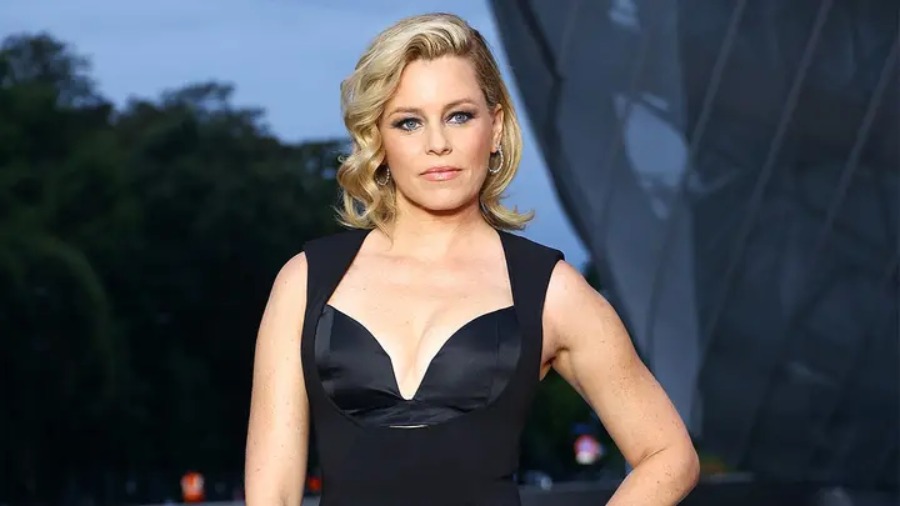
Elizabeth Banks reignited a political debate this week after saying she cannot understand why a majority of White women backed President Donald Trump over Vice President Kamala Harris in the 2024 election. Speaking on a Bustle podcast episode highlighted by Variety, Banks used the moment to urge women to act more like her “Hunger Games” character and resist what she called a “fascist regime.”
Her comments turned a pop-culture interview into a broader political statement. They also revived a familiar post-election argument about gender, race, celebrity activism, and how women voters split in one of the country’s most divisive elections.
Banks’ most pointed remark focused on the 53% of White women she said did not vote for Harris. She said she could not understand that decision and asked, “What were you thinking?”
That line quickly became the headline moment from the interview. It framed her frustration not just as political disappointment, but as disbelief directed at a specific voting bloc that again played a major role in the presidential outcome. [Suggested Link: 2024 election voter demographics]
Why she invoked Effie Trinket and ‘The Hunger Games’
Banks tied her political message to Effie Trinket, the character she played across the original “Hunger Games” films. In the franchise, Effie begins as a polished representative of the ruling system before later aligning herself with the rebellion against it.
Banks said that transformation is what makes the role so meaningful to her. She described Effie as someone who first props up a system she benefits from, only later seeing how unfair it is when the consequences become impossible to ignore.
Using that character arc as a real-world analogy, Banks said she wishes more women were becoming “revolutionaries.” Her argument was clear: people who benefit from a system still have a responsibility to challenge it once they recognize its harm.
That is the core of why her remarks landed so forcefully. She was not only criticizing a voting result. She was urging political and moral action from women she believes failed to recognize what was at stake. [Suggested Link: Elizabeth Banks political comments]
Her support for Kamala Harris was already public
Banks’ criticism did not come out of nowhere. Before the 2024 election, she had been outspoken in support of Kamala Harris and joined Harris’ Reproductive Freedom Bus in Las Vegas less than a month before Election Day.
At the time, Banks wrote on Instagram that women’s rights, freedom, and access to health care were on the line. She urged supporters to check their registration and make a voting plan.
The reaction from the White House was swift and blunt. Davis Ingle, a White House spokesman, told Fox News Digital that “nobody in their right mind cares what out-of-touch woke celebrities in Hollywood say or think.”
That response shifted the story from celebrity commentary to a more familiar political clash between the Trump administration and outspoken Hollywood figures. It also ensured Banks’ comments would circulate far beyond entertainment coverage. [Suggested Link: White House response to celebrity criticism]
Banks will not return as Effie Trinket in the newest “Hunger Games” installment. Instead, Elle Fanning is set to play a younger version of the character in “The Hunger Games: Sunrise on the Reaping,” which the source says is scheduled to premiere this fall.
That detail adds another layer to the moment. Banks is reflecting publicly on one of her best-known roles just as the franchise moves forward without her, turning the interview into both a political statement and a cultural callback.
Why Elizabeth Banks’ Trump comments are drawing attention
Banks’ remarks matter because they touch several fault lines at once: Trump vs. Harris, celebrity influence, and the ongoing debate over why many White women voters continue to support Republicans even when prominent actresses and activists urge otherwise. Pew’s analysis backs the central electoral claim that a majority of White women voted for Trump in 2024.
In the end, Banks’ message was not subtle. She said she cannot understand the White women who voted for Trump, and she used Effie Trinket as a warning about what happens when people support a system until its costs become undeniable. Whether that persuades anyone is another matter, but it has already reignited a fierce argument over politics, power, and who Hollywood still believes it can reach