



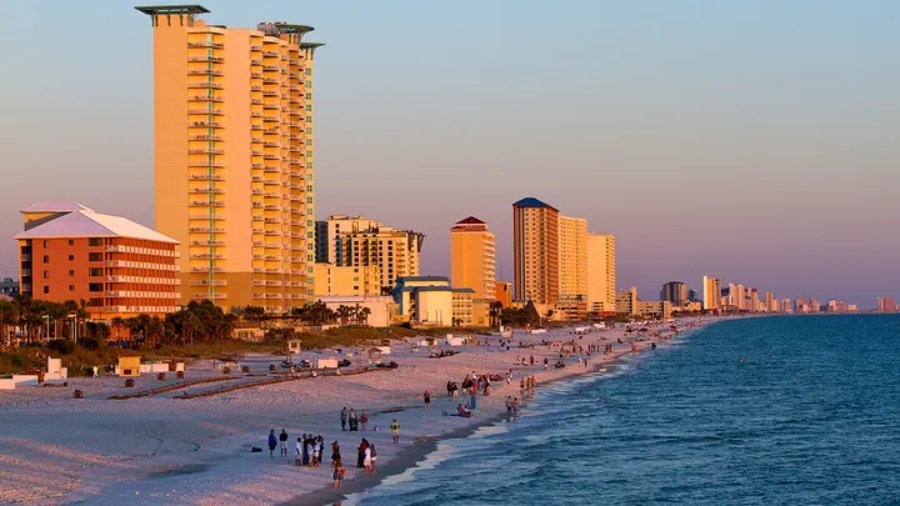
Two of the South’s most visited spring break destinations are drawing a firm line this season. From nighttime beach closures to outright alcohol bans, Panama City Beach, Florida, and Gulf Shores, Alabama, are rolling out some of their most assertive seasonal restrictions yet — and officials are making clear the rules come with real consequences.
The moves signal a broader shift in how coastal resort towns are managing the annual surge of college students and vacationers that descends each spring.
Starting March 12 and running through April 30, Panama City Beach is closing designated sections of its shoreline every night between 10 p.m. and 4 a.m. According to the city’s official website, the closures are designed to prevent large late-night gatherings and free up officers to focus their patrols elsewhere during the season’s peak weeks.
Police Chief J.R. Talamantez framed the restrictions as a commitment to the city’s reputation rather than a punitive measure. “Panama City Beach is a world-class destination, and our job is to ensure it remains safe for our residents and visitors alike,” he said on the city’s website.
The overnight closures are only part of the city’s spring break enforcement strategy.
Alcohol Banned on the Beach, Sales Restricted Overnight
Beyond the nighttime closures, Panama City Beach has activated a full ban on alcohol on the beach throughout March, a measure that applies to the entire coastline during that period. The city is also enforcing a restriction on alcohol sales between 2 a.m. and 7 a.m.
The stakes for ignoring these rules are significant. City officials have warned that violations could result in fines, arrest, or jail time — language intended to signal that enforcement will be active, not symbolic.
For visitors accustomed to the anything-goes reputation the area once carried, the 2026 season marks a clear departure.
Across the state line, Gulf Shores, Alabama, is similarly tightening its grip on spring break behavior. City officials have reinstated their seasonal alcohol prohibition on public beaches for 2026, according to a report by television station WJHG.
The ban prohibits both the possession and consumption of alcohol on public beaches and runs from March 1 through April 28 — covering nearly the entire spring break window.
The renewal suggests Gulf Shores views the policy as an ongoing necessity rather than a one-time experiment, reinforcing a trend of firmer seasonal governance across the Gulf Coast.
Miami Beach Takes the Opposite Approach
Not every coastal city is tightening its grip. Miami Beach is charting a different course this spring, walking back some of the stricter measures it had previously put in place during a high-profile earlier crackdown.
Christopher Bess, public information officer with the Miami Beach Police Department, described a city that has fundamentally changed its relationship with the spring break crowd. “We are divorced with spring break,” Bess said. “The last two years, there were no fatalities, no shootings, no chaos.”
The loosened restrictions don’t mean a hands-off approach, however. Bess confirmed that officers will continue to monitor crowds closely and enforce city ordinances throughout the spring break period. The goal, he indicated, is a calmer, more controlled atmosphere — not a return to the chaos that once defined the city’s spring season.
From the Florida Panhandle to the Alabama coast, spring break 2026 is shaping up as a season defined by stricter rules, stiffer penalties, and a clear message from resort communities: the era of unchecked beachfront mayhem is over. Whether these measures succeed in transforming the tone of the season — without driving visitors away entirely — will likely determine how far other Gulf Coast towns are willing to go in the years ahead.