



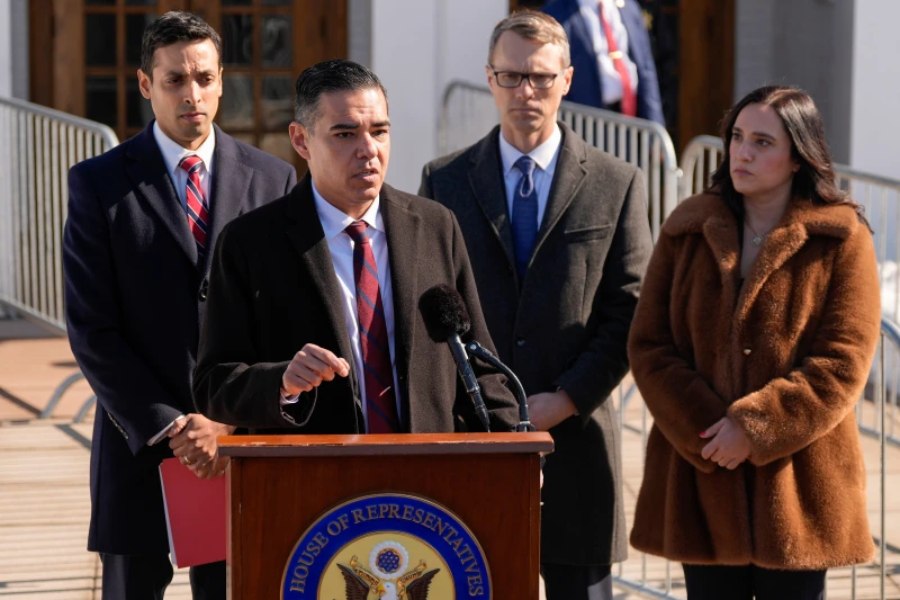
Washington is not done with the Epstein files — and now Congress is making that unmistakably clear.
The House Oversight Committee voted Wednesday to compel Attorney General Pam Bondi to testify before lawmakers, formally subpoenaing her over the Justice Department’s management of records tied to the Jeffrey Epstein sex trafficking investigation. The vote marks one of the most direct congressional challenges yet to the Trump administration’s handling of one of the most politically charged document releases in recent memory.
What made the vote especially striking: five Republicans sided with Democrats to pass the subpoena. The measure was put forward by GOP Rep. Nancy Mace of South Carolina, underscoring that the backlash is no longer confined to one side of the aisle.
“The American people want answers on the Epstein files, and so do we,” Mace wrote on X following the vote.
The Justice Department did not immediately respond to a request for comment.
How the Epstein File Saga Unraveled
The controversy has been festering for well over a year, and each new development has deepened rather than resolved the public’s suspicions.
It began when Bondi handed binders of Epstein-related documents to conservative media influencers at the White House — a rollout that drew immediate ridicule for containing no meaningful new revelations. Months of internal review followed, culminating in a July announcement in which the DOJ declared that no Epstein “client list” existed and that there was no justification for releasing additional materials.
That conclusion triggered an uproar. Congress responded by passing legislation requiring the Justice Department to release the files. Since the first batch dropped in December, critics — including prominent conservatives — have accused the administration of mishandling the process and holding back too much.
Administration officials have pushed back, arguing that attorneys worked as fast as they could to properly review, redact, and release the millions of documents the law required.
The committee’s patience ran out last month during a tense congressional hearing in which Bondi faced a barrage of criticism over the quality of the releases themselves.
Lawmakers lambasted the Justice Department for sloppy redactions that inadvertently exposed private details about Epstein’s victims — including nude photographs. Bondi acknowledged that the DOJ had removed certain files once it was informed they contained victims’ identifying information, and told Congress that staff had done their “very best” within the legal timeframe.
That explanation satisfied few in the room.
The subpoena comes just one week after the Justice Department acknowledged it was investigating whether any documents had been improperly withheld — a significant admission triggered by reporting from multiple news organizations.
At the center of that inquiry: several FBI interview summaries that appear to be absent from the released files. Those summaries document conversations with an unidentified woman who came forward following Epstein’s 2019 arrest and alleged she had been sexually assaulted by both Epstein and former President Donald Trump when she was a minor during the 1980s. The accusations, which have not been corroborated, were reportedly not included in materials released to the public. Rep. Robert Garcia of California, the committee’s top Democrat, left no ambiguity about his view of Bondi’s conduct.
“For months, Attorney General Bondi has been instrumental in orchestrating the White House’s cover-up of the Epstein files, and has failed to comply with our bipartisan subpoena for the release of the complete, unredacted files,” Garcia said in a statement. “The American people deserve transparency, survivors deserve justice, and we are demanding answers.”
Bondi has consistently defended the department’s handling of the documents. She has also accused Democrats of weaponizing the Epstein controversy to divert attention from the administration’s accomplishments — though some of the loudest voices demanding answers have come from within Trump’s own political base.
Adding another layer to an already complex story, former President Bill Clinton and former Secretary of State Hillary Clinton each appeared before the committee last week for separate depositions regarding Bill Clinton’s documented past connections to Epstein — associations that date back more than two decades.
Bill Clinton told lawmakers he “did nothing wrong” in his dealings with Epstein and said he had witnessed no indication of Epstein’s criminal behavior. Hillary Clinton stated she had no knowledge of Epstein’s crimes and told lawmakers she did not recall “ever encountering Mr. Epstein.” The subpoena now sets up a potential legal and political confrontation between Congress and the nation’s top law enforcement officer. Whether Bondi complies, challenges the subpoena, or negotiates terms for a voluntary appearance will shape the next chapter of this prolonged saga.
For the families of Epstein’s victims, and for the millions of Americans who have watched this story drag on without resolution, the committee’s move offers a measure of hope — even if answers remain elusive.