



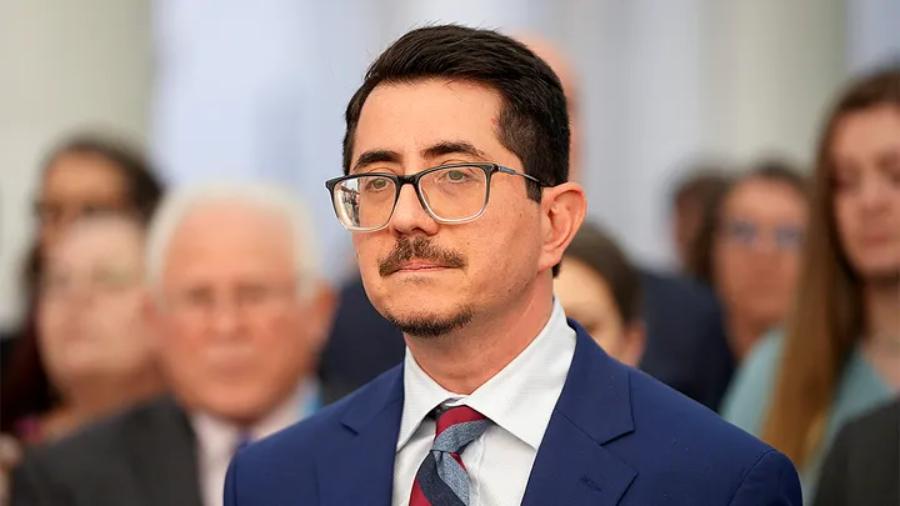
Travis County District Attorney José Garza has moved to put to rest a growing political firestorm, declaring unequivocally that his office will not seek charges against the Austin police officers who fatally shot a gunman responsible for one of the deadliest mass shootings in recent Texas history — even as the controversy surrounding his office’s mandatory grand jury review policy continues to deepen.
“These officers are heroes, and it should go without saying that my office is not seeking any charges and would not seek charges,” Garza said in a public statement. “The accounts to the contrary are false, intentionally false, and are being peddled for obvious political purposes.”
The declaration came after days of mounting pressure from law enforcement groups, state officials, and the public, triggered by revelations that the officers — widely praised for their swift response — could technically face a grand jury under a standing policy Garza’s office instituted in 2021 requiring all officer-involved shootings and serious use-of-force incidents to undergo grand jury review.
The Attack
In the early hours of last Sunday, Ndiaga Diagne, a 53-year-old naturalized U.S. citizen originally from Senegal, opened fire at Buford’s Backyard Beer Garden, a popular Austin establishment. Three people were killed: Savitha Shan, 21; Jorge Pederson, 30; and 19-year-old Ryder Harrington. Thirteen others were wounded. Responding Austin police officers engaged Diagne and shot him dead, preventing what authorities and witnesses say could have been a far larger massacre.
The shooting has been classified by investigators as a suspected terror attack, though the full scope of Diagne’s motive remains under active investigation. Law enforcement officials credit the officers’ rapid and decisive response with saving an unknown number of additional lives.
The Policy at the Center of the Storm
What transformed a moment of near-universal law enforcement praise into a political controversy was the disclosure that Garza’s office had a blanket policy — put in place in 2021 — mandating that every officer-involved shooting be referred to a grand jury, regardless of circumstances. The policy was adopted during a period of intense national debate over police accountability following the death of George Floyd in Minneapolis, which ignited widespread calls for systemic reform of American policing.
Critics argue the policy was never designed as a neutral accountability mechanism, but rather as an ideologically driven instrument aimed at subjecting officers to legal jeopardy even in clear-cut cases of justified use of force.
Doug O’Connell, whose law firm has been engaged by the Austin Police Association to represent the involved officers, told reporters he believes the policy was not independently conceived by Garza’s office but directed by an outside organization. “It’s my belief that the Wren Collective has directed the district attorney to review officer-involved cases this way,” O’Connell said. “It seems they’re very anti-law enforcement officers.”
The Wren Collective is a progressive criminal justice reform nonprofit that advocates for systemic changes to the American legal system and has supported the campaigns of reform-minded district attorneys across the country. It is largely composed of former public defenders.
However, the organization pushed back firmly against the characterization. Wren Collective founder Jessica Brand issued a statement directly praising the officers’ actions. “Three people died in a mass shooting last week, more people were harmed, families are grieving and the entire city is in mourning,” she said. “The officers did heroic work and stopped what could have been an even bigger tragedy. As an Austin resident, I thank them.”
Governor Abbott Enters the Fray
Texas Governor Greg Abbott escalated the political stakes considerably when he weighed in on the situation publicly. Praising the officers as heroes, Abbott made a pointed warning directed at Garza’s office: “These police officers are heroes who saved lives. Whatever the DA does, I will have the final say in the fate of these police officers.”
The statement raised immediate legal questions about the scope of gubernatorial authority in local prosecutorial decisions, with Abbott’s office not immediately clarifying the specific legal mechanisms he intended to invoke. Under Texas law, the governor holds pardoning power and certain emergency intervention authorities, though the extent to which those powers apply to ongoing local prosecutorial processes is constitutionally nuanced.
Texas state Representative Mitch Little, a Republican and former impeachment attorney, was more direct in his criticism of the underlying policy. “There is no legal justification to have a grand jury for every single officer-involved shooting,” he said. “The only explanation for that is a leftist ideological bent on the part of the district attorney’s office.”
A Policy Critics Call Opaque and Dangerous
Beyond the political battle, law enforcement advocates have raised substantive concerns about how the mandatory grand jury review policy actually operates in practice — and what it means for officers on the street.
O’Connell highlighted a structural problem: grand jury proceedings are conducted in secret, with defense attorneys barred from attending or presenting evidence on behalf of the accused. “Nothing about it is fair or balanced. The district attorney holds all the power when it comes to grand juries,” he said. “We know that grand juries have been manipulated because we’ve had to defend officers who have been indicted.”
The concern extends beyond individual cases. O’Connell argued that the policy, and the uncertainty it creates, actively impairs officers’ ability to make life-or-death decisions in the field. “Every time an officer is dispatched to a violent criminal call, they’ve got to be thinking: ‘I could be killed, or, depending on how this goes, I could be indicted,'” he said.
Michael Bullock, president of the Austin Police Association, echoed that frustration, pointing to the sheer duration of the review process as a compounding injustice. “There’s no need to subject these officers to that, especially since it’s taking the DA over a year in almost every case to present these to the grand jury,” he said. “That’s way too long and added stress for officers who have already been through a lot.”
At its core, the Austin controversy reflects a tension that has been building across American cities since 2020: the effort to introduce greater accountability into policing versus the practical and psychological costs those accountability mechanisms impose on the officers expected to respond to violence in real time.
Garza’s policy was born from a genuine and widely shared concern — that officer-involved shootings too often escaped meaningful legal scrutiny, particularly in cases involving communities of color. But its application to officers who stopped an active mass casualty event, in a case where public consensus around the justifiability of the shooting is essentially unanimous, has exposed the limits of blanket policies that do not account for context.
What happens next — whether the grand jury review proceeds as a formality, whether Abbott pursues intervention, and whether the Austin Police Association pushes for the policy’s repeal — will likely define the political landscape around policing in Texas for years to come.
For the officers at the center of this storm, the immediate answer is clear: they will not be charged. But the debate their case has ignited is far from over.