



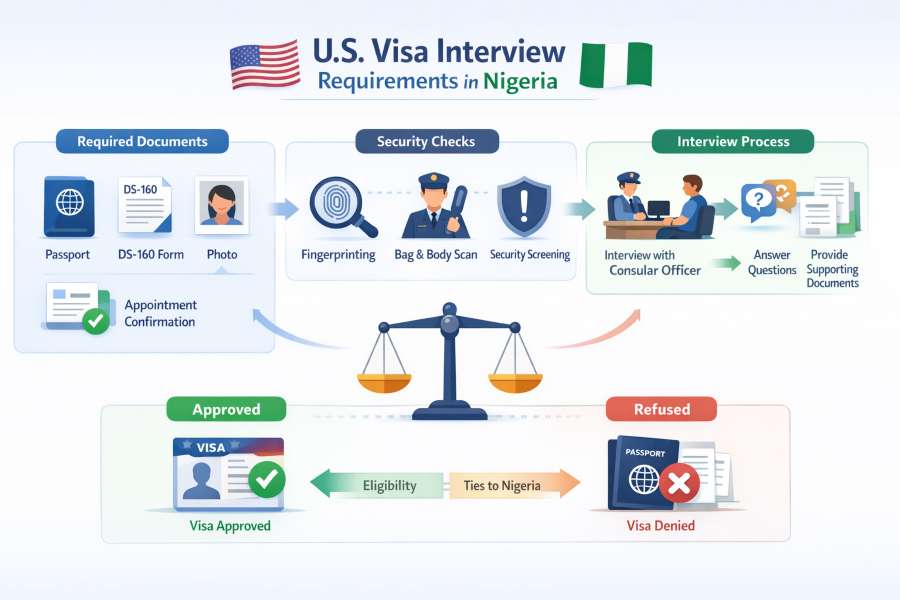
Applying for a U.S. visa as a Nigerian resident involves several specific steps, one of the most critical being the visa interview. This interview is the core part of the process, where a consular officer evaluates your eligibility through questions and document review. Proper preparation, understanding the requirements, and knowing what to expect can significantly improve your chances of approval.
This comprehensive guide explains the U.S. visa interview requirements for applicants applying from Nigeria, including eligibility details, document checklists, common interview questions, visa categories, tips for success, and what happens after the interview.
Who Needs a U.S. Visa Interview in Nigeria?
Most U.S. visa applicants are required to attend an interview at the U.S. Embassy in Abuja or the U.S. Consulate in Lagos.
You generally must attend an interview if:
-
You are between the ages of 14 and 79 (exceptions apply)
-
You are applying for a non-immigrant or immigrant visa that is not eligible for interview waiver
-
You are a first-time applicant
Certain applicants may qualify for interview waivers (based on age, previous visa status, or specific categories), but these exemptions are limited and must be confirmed when scheduling your appointment.
Where U.S. Visa Interviews Take Place in Nigeria
Nigeria currently has two diplomatic missions where U.S. visa interviews are conducted:
-
U.S. Embassy in Abuja, Nigeria
-
U.S. Consulate General in Lagos, Nigeria
Your interview location will be shown when you schedule your appointment.
Visa Categories Requiring an Interview
The requirement for an interview applies to both major visa pathways:
Non-Immigrant Visas
These are for temporary stays, such as:
-
Tourist visas (B-2)
-
Business visas (B-1)
-
Student visas (F-1, M-1)
-
Exchange visitor visas (J-1)
-
Work visas (H-1B, L-1, etc.)
Most applicants in these categories must appear for an interview.
Immigrant Visas
These are for those seeking permanent residency (Green Cards), including:
-
Family-sponsored visas
-
Employment-based visas
-
Diversity Visa (DV) Program
Interviews are mandatory for virtually all immigrant visa applicants.
Scheduling Your U.S. Visa Interview
The first step is to complete the online visa application form, pay fees, and then schedule your interview.
1. Complete Form DS-160
This is the online application form for non-immigrant visas.
You must fill it out accurately and upload a photo that meets U.S. specifications.
2. Pay the Visa Fee
Fees vary by visa type. Keep the receipt, as you will need it for scheduling.
3. Schedule the Interview
Use the U.S. Visa Information and Appointment Services website for Nigeria to book your date, time, and location.
During scheduling, you will need:
-
DS-160 confirmation number
-
Visa application fee receipt
-
Passport information
What Documents You Must Bring to Your Interview
Consular officers will verify your eligibility based on your documentation and your interview responses. Bringing complete and organized documents increases confidence and clarity.
The One Section Where Bullet Points Are Used
-
Passport valid for at least six months beyond your intended stay in the U.S.
-
DS-160 confirmation page
-
Appointment confirmation letter
-
Visa application fee receipt
-
One recent passport-style photograph (if not accepted digitally)
-
Proof of ties to Nigeria (employment, family, property, etc.)
-
Supporting documents relevant to your visa category
Ensure your documents are neatly arranged and easily accessible for review.
Supporting Documents by Visa Type
For Tourist or Business Visas (B-1/B-2)
-
Travel itinerary and hotel reservations
-
Letter from employer indicating leave and position
-
Proof of financial ability (bank statements, payslips)
-
Evidence of strong ties to Nigeria (family, property, employment)
For Student Visas (F-1, M-1)
-
I-20 or DS-2019 form from your U.S. school
-
SEVIS fee receipt
-
Academic transcripts and test scores (TOEFL, SAT, GRE, etc.)
-
Proof of financial support for education and living expenses
For Work Visas (H-1B, L-1, etc.)
-
Approved petition (Form I-129) from your employer
-
Employment contract
-
Documentation of professional qualifications and experience
For Immigrant Visas
-
Approval from the National Visa Center (NVC)
-
Civil documents such as birth certificate, marriage certificate
-
Police clearance and medical examination results
Documents may vary based on individual circumstances, so always check the latest guidance from the U.S. Embassy or Consulate.
Preparing for the Interview
Preparation is just as important as the documents you bring.
Review Your Application
Know the details you provided in the DS-160 form, as officers often ask related questions.
Be Honest and Clear
Provide truthful responses. Inconsistencies or evasive answers can lead to denial.
Practice Common Questions
Officers generally ask about:
-
Purpose of your trip
-
Duration of stay
-
Ties to Nigeria
-
Financial ability to support your travel
-
Employment or school status
Practicing clear and concise responses helps reduce interview anxiety.
Typical Questions Asked During Visa Interviews
Consular interviews vary depending on the visa type, but common themes include:
-
“What is the purpose of your travel to the United States?”
-
“How long do you plan to stay?”
-
“Who is sponsoring your trip?”
-
“What ties do you have to Nigeria that ensure your return?”
-
“Have you traveled abroad before?”
For students:
-
“Why did you choose this school?”
-
“How will you finance your studies?”
For work visas:
-
“What is your role with the U.S. employer?”
-
“Do you have professional experience?”
Clear, specific, and truthful answers are key.
Common Reasons U.S. Visas Are Denied at Interview
Visa denials can occur for many reasons, such as:
-
Lack of strong ties to Nigeria
-
Insufficient financial evidence
-
Incomplete documentation
-
Previous immigration violations
-
Failure to satisfy consular officer of intent
A denial may be temporary or permanent depending on circumstances.
After the U.S. Visa Interview
Once the interview is complete, one of three things usually happens:
Visa Approved
Your passport will be kept for visa stamping and returned within a few days.
Visa Refused
You will receive a refusal slip explaining the section of law (e.g., 214(b)) under which the visa was denied.
Administrative Processing
In some cases, additional review is required before a decision can be made.
Best Practices for Your Visa Interview
-
Arrive early for your appointment
-
Dress neatly and professionally
-
Remain calm and respectful
-
Answer questions confidently and directly
-
Avoid providing unsolicited information
A clear, confident presentation works in your favor.
Understanding Interview Waiver Eligibility
Some applicants renewing visas may be eligible for interview waivers, typically if:
-
They hold a previous U.S. visa
-
They have a favorable travel history
-
They meet specific criteria based on age or category
Interview waiver eligibility is determined during appointment scheduling.
Tips for Nigerian Applicants
-
Begin the process early due to appointment wait times
-
Monitor visa appointment availability online
-
Organize your supporting documents logically
-
Keep proof of financial stability ready
-
If uncertain, consider professional guidance
Preparation and patience are essential.
Final Summary
If you are applying for a U.S. visa from Nigeria, the interview is a critical requirement. Whether you seek a tourist, student, work, or immigrant visa, you must:
-
Complete the DS-160 (or immigrant equivalent)
-
Pay fees and schedule your interview
-
Attend your interview at the U.S. Embassy in Abuja or the Consulate in Lagos
-
Present accurate documents and truthful answers
While interview procedures may feel intimidating, knowing the requirements and expectations makes the process far more manageable. Good preparation and honesty go a long way toward a successful outcome.
