



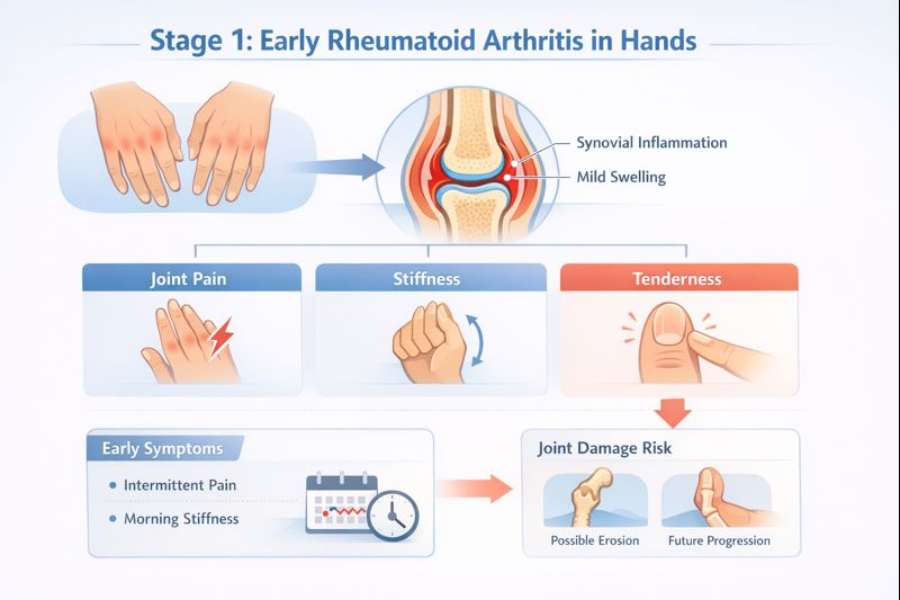
Stage 1 rheumatoid arthritis often begins quietly. In many people, the earliest signs appear in the hands long before a formal diagnosis is made. Mild stiffness, subtle swelling, or unexplained pain may come and go, making it easy to dismiss as overuse or aging. However, this early phase is critical. Recognizing and addressing stage 1 rheumatoid arthritis in the hands can significantly slow disease progression and protect long-term joint function.
- Understanding Rheumatoid Arthritis and Its Stages
- Why the Hands Are Commonly Affected First
- Early Symptoms of Rheumatoid Arthritis in the Hands
- Morning stiffness
- Mild joint swelling
- Dull or aching pain
- Reduced grip strength
- Warmth without visible redness
- How Stage 1 Rheumatoid Arthritis Differs From Other Hand Conditions
- Rheumatoid arthritis vs osteoarthritis
- Rheumatoid arthritis vs carpal tunnel syndrome
- Rheumatoid arthritis vs tendonitis
- What Is Happening Inside the Hand Joints in Stage 1
- Diagnostic Process for Early Rheumatoid Arthritis in Hands
- The Role of Autoantibodies in Early Disease
- Risk Factors for Developing Rheumatoid Arthritis in the Hands
- The Single Most Important Early Warning Signs
- Treatment Options in Stage 1 Rheumatoid Arthritis
- Hand-Specific Management Strategies
- Lifestyle Changes That Support Early Treatment
- Monitoring Disease Progression in the Hands
- What Happens If Stage 1 Rheumatoid Arthritis Is Untreated
- Emotional and Psychological Impact of Early Diagnosis
- Prognosis for Stage 1 Rheumatoid Arthritis in Hands
- Living With Early Rheumatoid Arthritis in the Hands
- When to See a Specialist
- Final Thoughts on Stage 1 Rheumatoid Arthritis in Hands
This article provides a detailed, medically grounded explanation of what stage 1 rheumatoid arthritis looks like in the hands, how it develops, how it is diagnosed, and what patients can realistically expect.
Understanding Rheumatoid Arthritis and Its Stages
Rheumatoid arthritis is a chronic autoimmune condition. Unlike osteoarthritis, which results from wear and tear, rheumatoid arthritis occurs when the immune system mistakenly attacks healthy joint tissue.
The disease progresses in stages, though progression speed varies between individuals.
What defines stage 1 rheumatoid arthritis
Stage 1 is considered the early inflammatory stage. At this point, joint damage is minimal or absent. The immune system has begun attacking the synovial lining of the joints, but erosion of bone and cartilage has not yet occurred.
In the hands, this stage is often the first visible sign of the disease.
Why the Hands Are Commonly Affected First
The hands contain many small joints with thin synovial linings, making them particularly vulnerable to autoimmune inflammation.
Joint structure and immune sensitivity
Small joints, such as those in the fingers and wrists, have limited space for swelling. Even mild inflammation can quickly affect movement and sensation.
Symmetrical involvement
One hallmark of rheumatoid arthritis is symmetry. In stage 1, symptoms often appear in both hands at the same joints, such as both index fingers or both wrists.
This symmetry helps distinguish rheumatoid arthritis from other hand conditions.
Early Symptoms of Rheumatoid Arthritis in the Hands
Symptoms in stage 1 rheumatoid arthritis are often subtle and intermittent. Many people experience flare-ups followed by periods of improvement.
Morning stiffness
Stiffness in the hands upon waking is one of the most common early signs. Unlike general stiffness, this sensation often lasts longer than 30 minutes and improves gradually with movement.
Mild joint swelling
Swelling may be barely noticeable at first. Rings may feel tight, or fingers may appear slightly puffy without redness or heat.
Dull or aching pain
Pain in early rheumatoid arthritis is often described as deep, dull, or throbbing rather than sharp. It may worsen after periods of inactivity.
Reduced grip strength
People may notice difficulty opening jars, turning keys, or holding small objects. This weakness is often subtle and progresses slowly.
Warmth without visible redness
Inflamed joints may feel warm to the touch even when the skin looks normal.
How Stage 1 Rheumatoid Arthritis Differs From Other Hand Conditions
Early rheumatoid arthritis can resemble other hand problems, making diagnosis challenging.
Rheumatoid arthritis vs osteoarthritis
Osteoarthritis typically affects joints unevenly and is linked to joint wear. Pain often worsens with use. Rheumatoid arthritis, in contrast, causes inflammatory pain and prolonged morning stiffness.
Rheumatoid arthritis vs carpal tunnel syndrome
Carpal tunnel syndrome primarily causes numbness and tingling due to nerve compression. Rheumatoid arthritis affects joints themselves and produces stiffness and swelling rather than nerve symptoms alone.
Rheumatoid arthritis vs tendonitis
Tendonitis usually affects a single tendon and improves with rest. Rheumatoid arthritis involves joints and tends to persist or worsen over time.
What Is Happening Inside the Hand Joints in Stage 1
Understanding the underlying process helps explain symptoms.
Synovial inflammation
The immune system targets the synovium, the thin membrane lining each joint. This causes swelling and increased fluid production.
Immune signaling and cytokines
Inflammatory chemicals known as cytokines drive the immune response. In stage 1, these signals are active but have not yet caused structural damage.
Absence of erosion
At this stage, X-rays usually appear normal. Cartilage and bone remain intact, which is why early treatment is so important.
Diagnostic Process for Early Rheumatoid Arthritis in Hands
Diagnosing stage 1 rheumatoid arthritis requires combining clinical judgment with laboratory and imaging tools.
Clinical examination
A physician evaluates joint tenderness, swelling, symmetry, and duration of symptoms. A detailed history is essential.
Blood tests
Blood tests may include markers of inflammation and autoimmunity. However, results can be normal in early disease.
Imaging studies
Ultrasound or MRI can detect synovial inflammation before X-rays show damage. These tools are increasingly used for early diagnosis.
Diagnostic uncertainty
Some patients experience symptoms before meeting full diagnostic criteria. These cases are often monitored closely for progression.
The Role of Autoantibodies in Early Disease
Autoantibodies play a key role in rheumatoid arthritis.
Rheumatoid factor and anti-CCP
Some patients test positive for rheumatoid factor or anti-CCP antibodies early in the disease. Others may not develop detectable antibodies until later.
Seronegative rheumatoid arthritis
People without detectable antibodies can still have rheumatoid arthritis. Diagnosis relies more heavily on symptoms and imaging in these cases.
Risk Factors for Developing Rheumatoid Arthritis in the Hands
Certain factors increase the likelihood of developing early rheumatoid arthritis.
Genetic predisposition
Family history raises risk, particularly in first-degree relatives.
Environmental triggers
Smoking, certain infections, and prolonged exposure to environmental pollutants are linked to increased risk.
Hormonal influences
Rheumatoid arthritis is more common in women, suggesting hormonal involvement.
The Single Most Important Early Warning Signs
This is the only section where bullet points are used.
-
Persistent morning stiffness in the hands lasting more than 30 minutes
-
Symmetrical pain or swelling in finger or wrist joints
-
Warmth in joints without obvious injury
-
Gradual loss of grip strength
-
Symptoms lasting more than six weeks
These signs warrant medical evaluation even if pain is mild.
Treatment Options in Stage 1 Rheumatoid Arthritis
Early treatment can dramatically alter the disease course.
Disease-modifying antirheumatic drugs
Medications known as DMARDs reduce immune activity and inflammation. Starting these drugs early improves long-term outcomes.
Anti-inflammatory medications
Nonsteroidal anti-inflammatory drugs help relieve pain and stiffness but do not prevent disease progression.
Corticosteroids
Short-term use may control inflammation during flares while long-term treatment plans are established.
Hand-Specific Management Strategies
Protecting hand function is a central goal in early rheumatoid arthritis.
Hand therapy and exercises
Targeted exercises maintain mobility, strength, and flexibility. Occupational therapists teach joint-protection techniques.
Activity modification
Learning how to reduce strain during daily tasks helps prevent symptom worsening.
Splinting
Temporary splints may provide joint support during flare-ups.
Lifestyle Changes That Support Early Treatment
Medical therapy works best when combined with lifestyle adjustments.
Smoking cessation
Stopping smoking reduces disease severity and improves treatment response.
Nutrition and inflammation
A balanced diet that supports overall health may help manage inflammation, though no diet cures rheumatoid arthritis.
Stress management
Chronic stress can worsen immune responses. Managing stress supports overall disease control.
Monitoring Disease Progression in the Hands
Regular monitoring is essential even when symptoms improve.
Clinical follow-up
Physicians assess symptom changes, joint function, and treatment response.
Imaging over time
Periodic imaging helps detect early structural changes before symptoms worsen.
Adjusting treatment plans
Treatment may be intensified or adjusted if inflammation persists.
What Happens If Stage 1 Rheumatoid Arthritis Is Untreated
Without treatment, inflammation may progress to later stages.
Joint damage risk
Persistent inflammation can erode cartilage and bone, leading to deformity.
Loss of hand function
Advanced disease can significantly impair daily activities.
Systemic effects
Rheumatoid arthritis can affect organs beyond the joints if uncontrolled.
Emotional and Psychological Impact of Early Diagnosis
Receiving a diagnosis of rheumatoid arthritis can be emotionally challenging.
Fear and uncertainty
Many people worry about long-term disability, even in early stages.
Importance of education
Understanding the disease and treatment options reduces anxiety and empowers patients.
Support systems
Support from healthcare providers, family, and patient communities improves coping.
Prognosis for Stage 1 Rheumatoid Arthritis in Hands
Outcomes vary, but early intervention improves prognosis significantly.
Potential for remission
Some patients achieve remission or very low disease activity with prompt treatment.
Slowed progression
Even when remission is not achieved, early treatment often prevents severe joint damage.
Individual variability
Disease course differs between individuals, emphasizing personalized care.
Living With Early Rheumatoid Arthritis in the Hands
Daily life adjustments help maintain independence and comfort.
Workplace considerations
Ergonomic tools and adaptive equipment reduce hand strain.
Daily activity planning
Balancing activity and rest prevents flare-ups.
Long-term outlook
With modern therapies, many people maintain active, productive lives.
When to See a Specialist
Early referral improves outcomes.
Role of rheumatologists
Rheumatologists specialize in diagnosing and managing inflammatory arthritis.
Timing of referral
Symptoms lasting longer than a few weeks, especially with morning stiffness, justify specialist evaluation.
Final Thoughts on Stage 1 Rheumatoid Arthritis in Hands
Stage 1 rheumatoid arthritis in the hands often begins subtly, but its impact can be significant if ignored. Early recognition, accurate diagnosis, and timely treatment can preserve joint function, reduce pain, and prevent long-term damage.
The key is not to wait for symptoms to become severe. Paying attention to early signs and seeking medical care can change the course of the disease and protect hand health for years to come.