



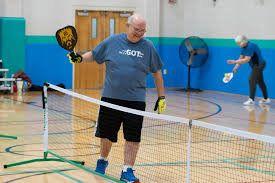
Pickleball, once a niche backyard game, is now emerging as one of the fastest-growing recreational sports in the United States, and health experts say its benefits extend well beyond the court.
Blending elements of tennis, badminton, and table tennis, pickleball is easy to learn and accessible to players of nearly any age or fitness level. That simplicity has helped fuel its rapid rise, particularly among older adults and those seeking a low-impact way to stay active.
Health researchers and recreation specialists point to several physical and mental benefits tied to regular play. Pickleball raises heart rate without placing excessive strain on joints, making it an appealing option for people managing conditions such as arthritis or diabetes. Studies and community health programs have also linked the sport to improved balance, better coordination, and reduced stress levels.
Unlike many structured fitness routines, pickleball offers a strong social component. Games are typically played in doubles, encouraging conversation and connection. For frequent travelers or families spread across different cities, the sport’s minimal equipment requirements make it easy to play almost anywhere with a court and a net.
Why Health Experts Are Paying Attention
Medical professionals note that pickleball delivers moderate cardiovascular exercise while engaging multiple muscle groups, particularly the core, arms, and legs. Regular participation has been associated with lower risks of heart disease and type 2 diabetes, as well as improved endurance and mobility.
Equally important, experts say, is consistency. Because the game is enjoyable and not overly demanding, players are more likely to stick with it compared to traditional gym workouts.
Getting Started on the Court
Pickleball can be played on outdoor or indoor hard courts, typically in singles or doubles formats. The rules are straightforward, and most beginners can rally within their first session. While some players transition from tennis or badminton, prior racket-sport experience is not required.
Recreation centers and public parks across the country have expanded pickleball court availability in response to growing demand, often converting unused tennis courts to accommodate the sport.
The Upsides and the Trade-Offs
Advocates highlight pickleball’s low-impact nature and quick learning curve as major advantages. It allows players recovering from injury or surgery to remain active while minimizing joint stress.
However, some competitive athletes argue that the sport lacks the intensity or competitive structure found in traditional racket sports. For many participants, though, that relaxed atmosphere is part of its appeal.
Advice for New Players
Coaches recommend that beginners focus on fundamentals rather than speed. Watching experienced players, practicing regularly, and learning from mistakes can accelerate improvement. Most importantly, experts stress that pickleball is meant to be enjoyable.
As communities continue to invest in accessible fitness options, pickleball’s blend of exercise, social connection, and simplicity appears to be securing its place as a long-term staple in recreational health.