



Baton Rouge, La. — For most of his life, Phil Larimore rarely spoke about the war.
To his sons, the most visible reminder of his World War II service was the missing right leg he carried with quiet resolve. Beyond that, Larimore said little about how he lost it or what he endured overseas. That silence lasted nearly 50 years.
It was not until 1994, when a pastor at St. Alban’s Chapel asked him to preach on the idea that freedom comes at a cost, that Larimore finally opened up. Prompted by the invitation and pressed by his four sons, he began recounting his experiences for the first time.
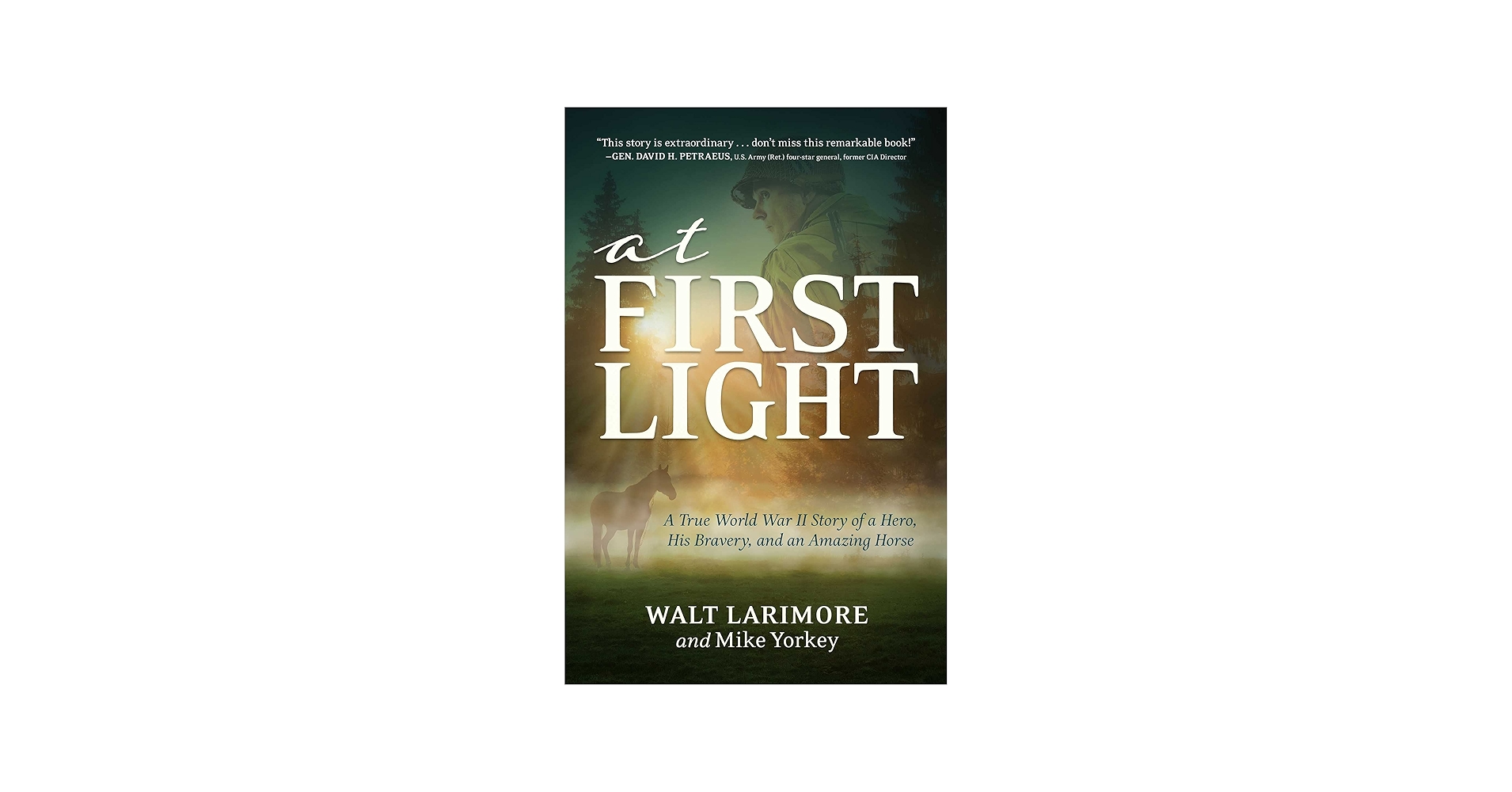
“Once he started talking, he didn’t stop,” said his son, Dr. Walt Larimore, who later co-wrote a book chronicling his father’s life. “The stories were unbelievable. And they were all true.”
Those stories now form the backbone of At First Light, a newly released biography published by Knox Press. The book details how Phil Larimore became the youngest commissioned officer in the U.S. Army during World War II, earned multiple medals for valor, carried out a top-secret mission behind enemy lines, and crossed paths with figures who would later shape American history.
Raised in Memphis, Tennessee, Larimore struggled academically as a boy but excelled outdoors. Time spent with relatives in Arkansas helped him develop into a skilled horseman and natural leader. Seeking structure and discipline, his parents enrolled him at Gulf Coast Military Academy, a decision that would alter his path.
“He really thrived there,” Walt Larimore said. “He became commander of cadets. People recognized his leadership right away.”
That trajectory accelerated after Japan’s attack on Pearl Harbor on Dec. 7, 1941. Because the academy offered ROTC and Larimore had distinguished himself, he qualified for Officer Candidate School upon enlistment. He completed the program while still 17 and was commissioned as a second lieutenant just 16 days after his 18th birthday.
For decades after the war, Larimore rarely spoke publicly about what followed, even as he built a career as a professor at Louisiana State University and served as a Scoutmaster. Only later did coworkers, scouts, and family begin to hear pieces of his wartime experience.
“At First Light” brings those fragments together, offering a portrait of a reluctant hero whose legacy remained largely untold until the final chapters of his life.