



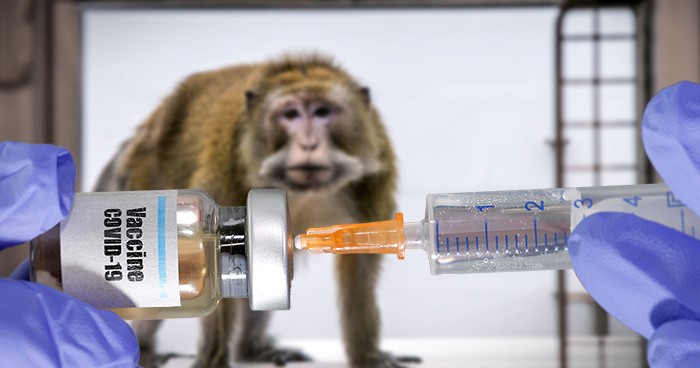
Washington — The U.S. House of Representatives has overwhelmingly approved legislation that dismantles a decades-old requirement for animal testing in drug development, clearing a major hurdle for modernizing how new medicines are evaluated in the United States.
Lawmakers passed the FDA Modernization Act as part of a broader FDA reform package, voting 392–28 in favor. The provision removes the federal mandate that drugmakers rely on animal tests before advancing treatments into human trials, allowing companies to use alternative methods grounded in human biology.
Supporters say the change could spare millions of animals, reduce the high failure rate of drugs in clinical trials, and speed safer treatments to patients while lowering development costs.
“Animal tests, in large part, are not predictive of the human response to drugs,” said Rep. Vern Buchanan of Florida, a lead sponsor of the legislation. He cited data showing that roughly 95 percent of drugs that pass animal testing ultimately fail in human trials.
The bill has drawn rare bipartisan backing. Democrats and Republicans introduced companion measures in both chambers in 2021, arguing that drug approval rules rooted in the 1938 Federal Food, Drug, and Cosmetic Act no longer reflect scientific reality. The House version was folded into the Food and Drug Amendments of 2022, while the Senate Health, Education, Labor, and Pensions Committee has included similar language in its own FDA reform package.
Advocates of the change say reliance on animal testing has slowed innovation and driven up drug prices. Developing a single drug can take more than a decade and cost billions of dollars, according to industry estimates. Critics argue that outdated testing methods contribute to those delays without reliably predicting human outcomes.
Rep. Elaine Luria of Virginia, the lead Democratic sponsor, said public opposition to testing on dogs, primates, and other animals has been a driving force behind the legislation. “We should be enthusiastically endorsing the idea of avoiding harm to animals when we can do so,” she said.
Lawmakers with medical and scientific backgrounds echoed that view. Rep. Buddy Carter of Georgia, a pharmacist, said newer testing models could improve both safety and affordability. Former veterinarian Rep. Kurt Schrader of Oregon pointed to advances such as tissue cultures and precision medicine as viable alternatives to animal testing.
Animal welfare and medical advocacy groups hailed the House vote as a landmark moment. Wayne Pacelle of Animal Wellness Action called it the most significant congressional action to date aimed at replacing animal testing with modern, human-relevant science.
More than 150 organizations, including patient advocacy groups, research institutions, and pharmaceutical companies, endorsed the FDA Modernization Act. Supporters argue the shift will accelerate adoption of technologies like organ-on-a-chip systems and advanced cell-based models that more accurately reflect human biology.
The legislation now awaits further action in the Senate. If enacted, it would mark a fundamental shift in U.S. drug regulation, ending a mandate that has shaped pharmaceutical development for more than 80 years and signaling a move toward what backers describe as faster, safer, and more humane science.